Home Cleaning
Cleaning Glasses in an Ultrasonic Cleaner: Dos and Don'ts
An ultrasonic cleaner for glasses lifts oil and sweat from nose pads, hinges and frame grooves. Learn the daily routine and the dos and don'ts.
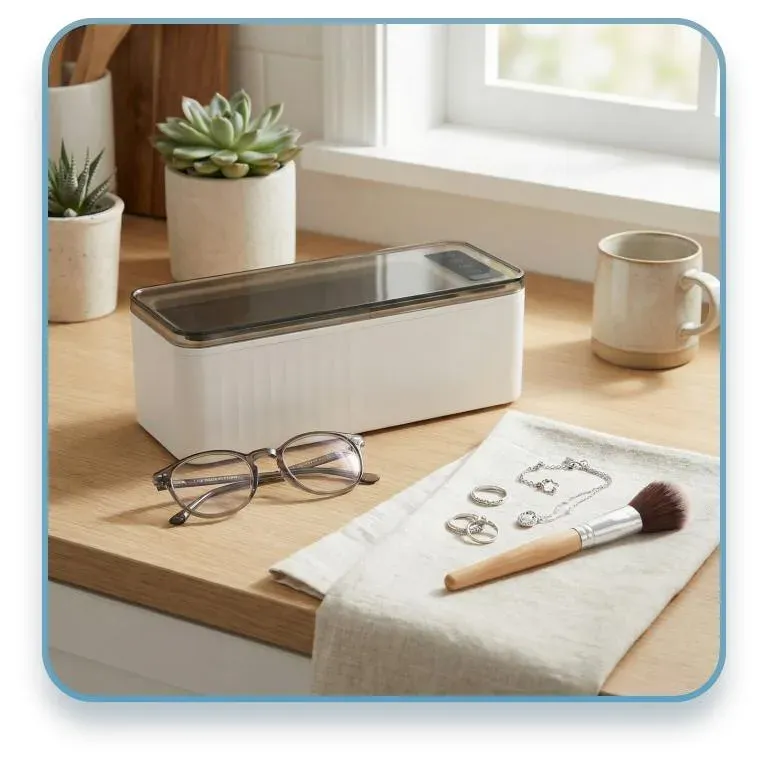
Glasses pick up a film of skin oil, sweat, dust and lotion every day, and that film settles into the places a cloth cannot reach — around the nose pads, inside the hinges and along the narrow groove where the lens meets the frame. Wiping the lenses removes the smudge you can see, but it leaves the residue in those small spaces, and that residue is what makes glasses feel grimy and look dull even after a wipe. An ultrasonic cleaner for glasses reaches those spaces with sound-driven bubbles in water, lifting the film without scrubbing. This guide explains how it works, the simple daily routine, and the dos and don'ts that keep lenses and frames safe.
A short ultrasonic cycle is gentle enough for most everyday glasses, including prescription glasses, reading glasses and sunglasses, because the cleaning action comes from water and tiny bubbles rather than from rubbing. The cycle runs for a few minutes, the glasses come out ready to rinse and dry, and the small parts that a cloth misses come out clean. But a cleaner is not a cure for every problem: a lens coating that is already cracked or peeling needs an optician's advice first, and a long soak does more harm than a short cycle. The sections below set out the routine and the cautions so you can clean glasses at home with confidence.
Why Glasses Are Hard to Clean by Hand
The parts of a pair of glasses that get dirtiest are the parts a cloth cannot reach. The nose pads sit against the skin all day, collecting oil and sweat, and the small gap between a pad and its metal arm holds a line of residue that wiping leaves behind. The hinges collect dust and skin oil in the joint, and the narrow groove where the lens sits in the frame traps a fine line of grime that a cloth passes over without touching. These are small spaces, but they hold most of the film on a pair of glasses, and they are the reason a pair can feel sticky or look cloudy even after the lenses have been wiped clean.
Skin oil and sweat are the main source of the film, and they are slightly sticky, so dust clings to them and builds a dull layer over the frame and the lens edges. A cloth can spread that layer rather than remove it, especially if the cloth itself has picked up oil from handling. Rinsing under a tap helps, but water alone does not lift the film from the narrow gaps, because the water passes over the surface without reaching into the joints. That is why hand cleaning often leaves the hinges and the nose pads still grimy, and why the glasses can feel as if they need cleaning again only a short time after they were wiped.
A 450 ml Model for Everyday Glasses
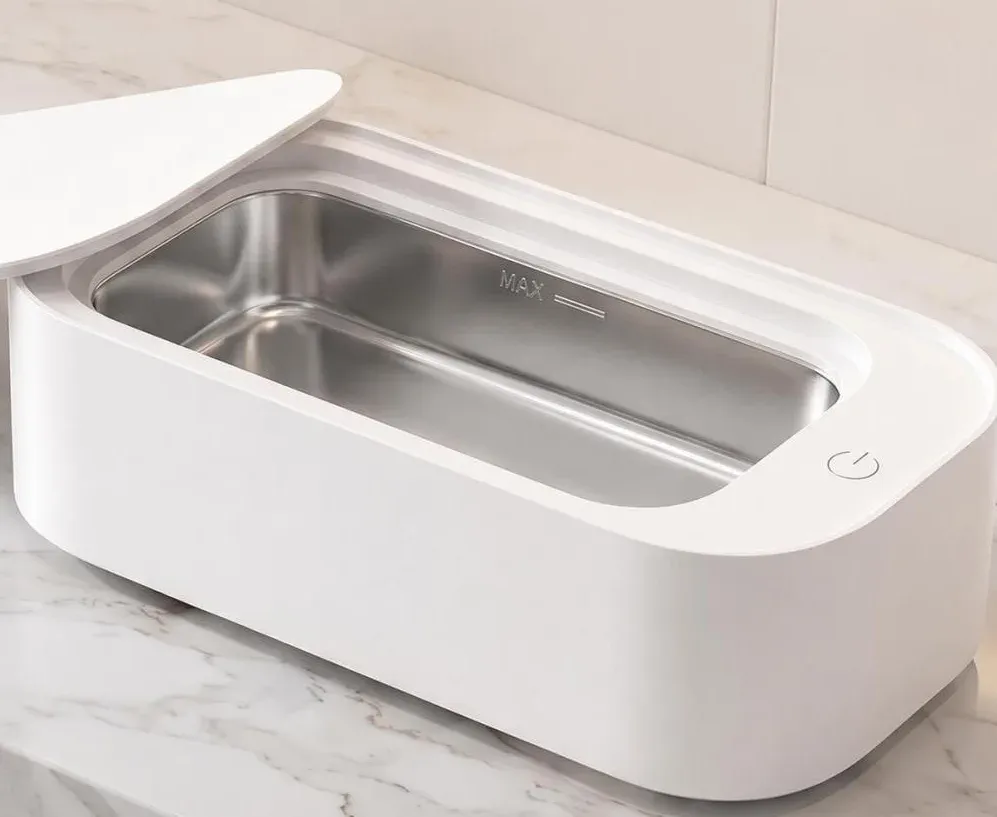
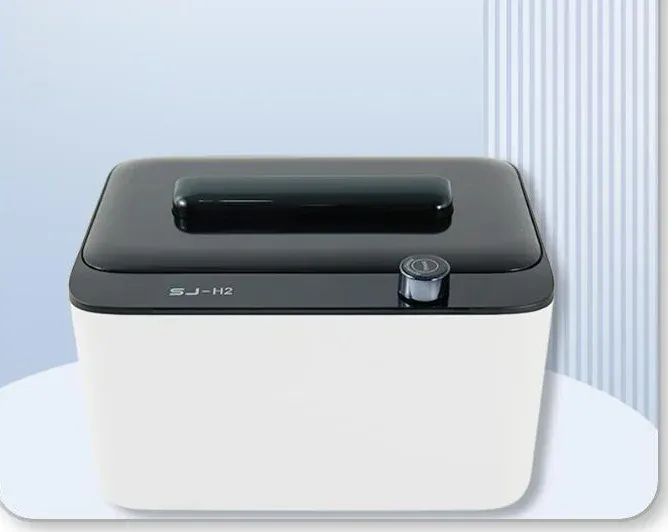
A 450 ml model suits everyday glasses, because the tank is wide enough for a pair of glasses to lie flat in the water with the lenses and the frame fully covered. The SJ-A1 Ultrasonic Cleaner for Jewellery and Glasses — 450ml is the household model for glasses, and it runs a short cycle that reaches the nose pads, the hinges and the frame groove in a few minutes. Put the glasses in with the lenses facing up, make sure they do not touch the sides of the tank, and run one short cycle. The 450 ml size is compact enough to sit on a shelf, and it uses only a small amount of water for each cycle, so it fits a daily routine without taking up much space.
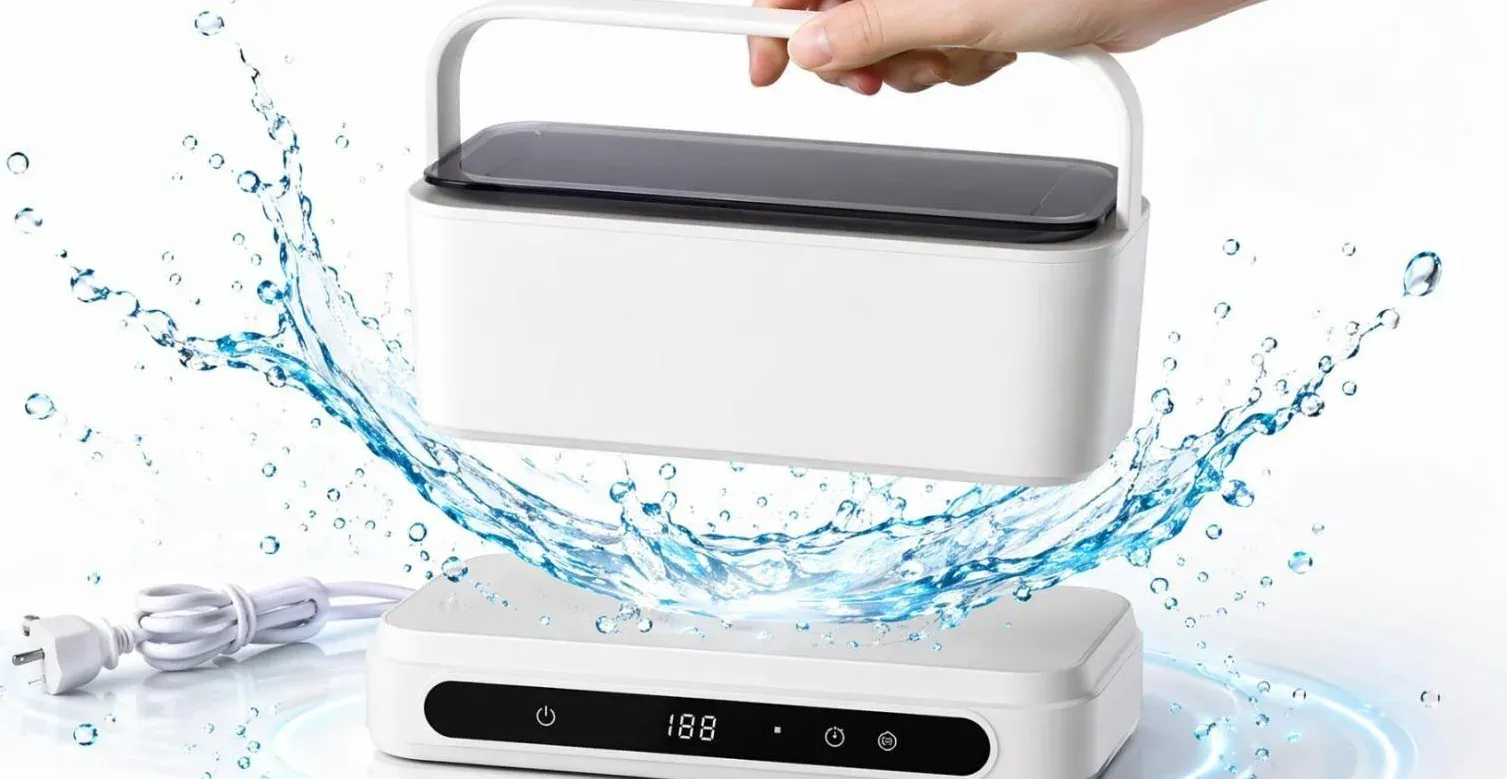
A 500 ml model is a good choice when the same cleaner is shared between glasses and jewellery, because it is large enough for a pair of glasses or a few rings in a single cycle. The SJ-W1 Ultrasonic Cleaner for Jewellery and Glasses — 500ml also cleans glasses in a separate cycle, which makes it a shared household tool for a home where several people wear glasses or jewellery. Use a separate cycle for glasses and for jewellery, rinse each item after its cycle, and dry each one with the right cloth. The compact size suits a home where space is limited, and it keeps one cleaner doing two jobs.
The Daily Routine, Step by Step
Start by rinsing the glasses under clean water to wash away loose dust, then fill the tank with enough clean water to cover the frames. Add a small amount of mild cleaner only if the instructions for your model allow it, and do not use a strong or unknown product. Place the glasses in the tank with the lenses facing up, close the lid if the model has one, and run a short cycle of three to five minutes. When the cycle ends, lift the glasses out, rinse them again under clean water, and lay them on a soft cloth. Do not leave glasses soaking in the tank after the cycle, and do not run a cycle for longer than needed.
Dry the glasses with a soft lens cloth, and take care around the hinges and the nose pads so you do not catch the cloth on a small part. A lens cloth removes the water without leaving lint, while a rough cloth can leave fine marks on a coating. Let the glasses air dry for a few minutes before you put them in a case, and store them in a hard case so the frames do not get bent. A short cycle once a day or a few times a week, with a rinse and a lens cloth dry, is enough to keep most glasses clear between professional cleans.
Dos and Don'ts for Glasses
Do not put glasses into an ultrasonic cleaner if the lens coating is already cracked, peeling or flaking, because the cycle can loosen the coating further. If you can see a crack or a flake in the coating, take the glasses to an optician first and ask whether ultrasonic cleaning is safe for them. Do not soak glasses for a long time, and do not run a cycle for longer than a few minutes, because a long soak does not clean better and it can work on the frame finish. Do not add a strong cleaner, a solvent or an unknown product to the water, because these can mark a coating or a frame.
Sunglasses and reading glasses suit the same routine as prescription glasses, because the cleaning action is the same for any frame and lens that is in good condition. Check the small screws in the hinges from time to time, and make sure they are firm before a cycle, because a loose screw can work free in the vibration. Rinse the glasses before and after the cycle, use plain water or a mild cleaner, and dry them with a lens cloth. A gentle routine, with a check of the frame and a short cycle, keeps glasses clear without risk to the lenses or the coating.
A short ultrasonic cycle, a rinse before and after, and a dry with a lens cloth are enough to keep glasses clear at home. Choose a tank that fits the frames you wear, use plain water or a mild cleaner, and keep glasses with a damaged coating out of the cleaner until an optician has checked them. Used gently and with the right pieces, a home ultrasonic cleaner keeps prescription glasses, sunglasses and reading glasses clearer for longer, without harsh scrubbing.
Looking for a home ultrasonic cleaner — or stocking them for your store? Send an inquiry through the form on this page and we will reply with specifications and a quotation. Mob / WhatsApp / WeChat: +86 15920036975. Private label and OEM are available from 300 units.