Home Cleaning
How to Clean Jewellery at Home Without Damaging It
Learn how to clean jewellery with ultrasonic cleaner cycles at home, which pieces suit it, which to keep out, and a gentle routine.
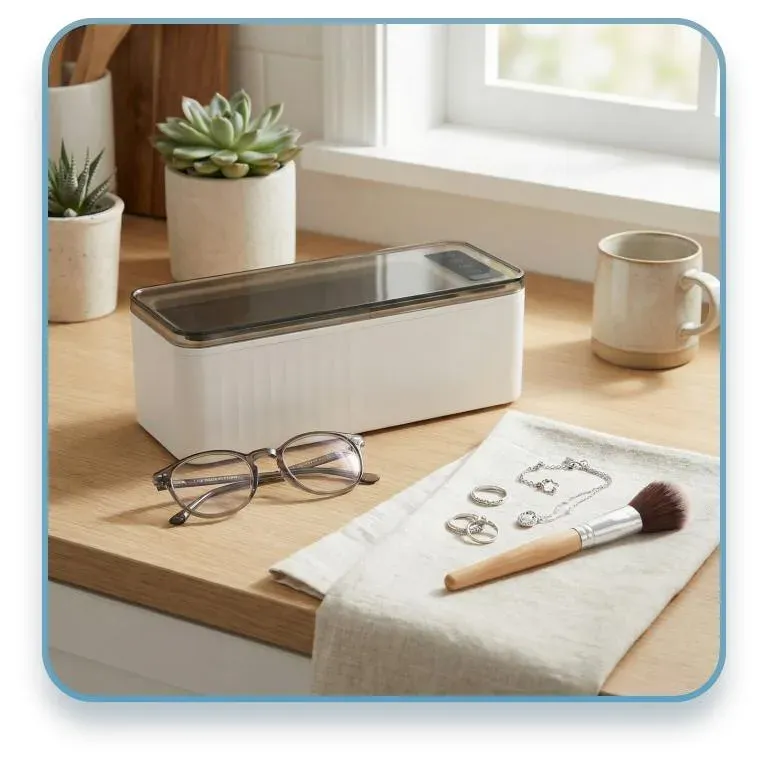
Jewellery picks up a film of skin oils, lotion, soap and dust every time it is worn, and that film dulls the shine long before the metal or the stones are worn out. A soft cloth can wipe the surface, but it cannot reach into the small spaces around a setting, under a stone or inside a chain link, and that is where the film settles. Learning how to clean jewellery with ultrasonic cleaner cycles at home gives you a way to reach those spaces without scrubbing. This guide explains which pieces suit an ultrasonic cleaner, which ones to keep out, and the gentle routine that keeps jewellery bright without damage.
Gold, platinum and most hard gemstones respond well to a short ultrasonic cycle, because the sound-driven bubbles in water loosen the film from the surface without touching it with anything hard. The cycle is short, the water is plain or mixed with a mild cleaner, and the piece comes out ready to rinse and dry. But not every piece belongs in the cleaner. Pearls, opals, emeralds and stones that are glued or filled need a different approach, and a loose setting should be checked before any cleaning. Knowing the difference is what keeps a piece safe, and the sections below set out both lists so you can sort a piece in a few seconds.
What an Ultrasonic Cleaner Does to Jewellery
An ultrasonic cleaner sends rapid sound waves through water, and those waves create tiny bubbles that form and collapse many times a second. The collapse produces a fine scrubbing action on any surface the water touches, including the narrow gap under a stone, the inside of a chain link and the fine lines of an engraved band. The jewellery does not move, and nothing hard touches it; the water and the bubbles do the work. A typical home cycle runs for a few minutes, which is long enough for the bubbles to reach the film on a piece without soaking it for hours. After the cycle, the loosened film is rinsed away under clean water, and the piece is ready to dry.
The film on jewellery is a mix of skin oils, lotion, soap residue and dust, and it is this film that makes a ring look dull and a chain feel slightly tacky. A short ultrasonic cycle loosens the film from the metal and from around the stones, so the piece regains its shine without polishing. The cycle does not change the metal or the stones; it removes the residue that sits on the surface. For a piece that has not been cleaned for a long time, a cycle may lighten the film but a second short cycle after a rinse can help. Do not expect the cleaner to repair a scratch or to restore a worn plating; it cleans the surface, and that is what it is for.
Jewellery That Suits Ultrasonic Cleaning
Gold and platinum are the most straightforward metals for ultrasonic cleaning, because they are hard enough to take a short cycle without marking. Diamonds are also well suited, and so are most hard gemstones such as sapphires, rubies and aquamarines, which hold their polish in water. A plain gold band, a platinum setting and a diamond solitaire are the pieces most people clean first, and they usually come out noticeably brighter after one short cycle. Silver can be cleaned in an ultrasonic cleaner too, but it tarnishes again quickly, so a silver piece may need a separate gentle polish after the cycle to keep its shine.
Before any piece goes into the cleaner, check the setting. Hold the piece up to the light and look at the claws or prongs that hold the stone; if a claw looks bent, worn or loose, or if the stone moves when you touch it gently, do not put the piece in the cleaner. Take it to a jeweller first, because the vibration can loosen a stone that is already insecure. Check the clasp on a chain or bracelet as well, and make sure it closes firmly. A quick check takes only a few seconds, and it is the step that prevents a stone from coming loose in the tank.
Jewellery to Keep Out of the Cleaner
Some stones and materials should never go into an ultrasonic cleaner. Pearls are soft and porous, and the vibration and the water can dull their surface and weaken the thread that holds them. Opals are also soft and can crack, and they hold water in their structure, so a cycle can damage them. Emeralds are often treated with oil to fill fine cracks, and an ultrasonic cycle can remove that oil and leave the stone looking cloudy. Stones that are glued into a setting, rather than held by claws, can come loose, because the vibration works on the glue. Filled or coated stones, including some treated diamonds and coloured stones, can also be damaged when the filling or coating is disturbed.
If you are unsure whether a piece belongs in the cleaner, do not put it in. Clean it by hand instead, with a soft cloth and a mild soap solution, and dry it with a soft cloth. For a valuable or sentimental piece, ask a jeweller for advice before using any cleaning method. A jeweller can tell you what a stone is, whether it has been treated, and whether an ultrasonic cycle is safe for it. Keeping an uncertain piece out of the cleaner costs nothing, while putting a fragile piece in can cause damage that is hard to repair.
A 900 ml Model for Several Pieces at Once
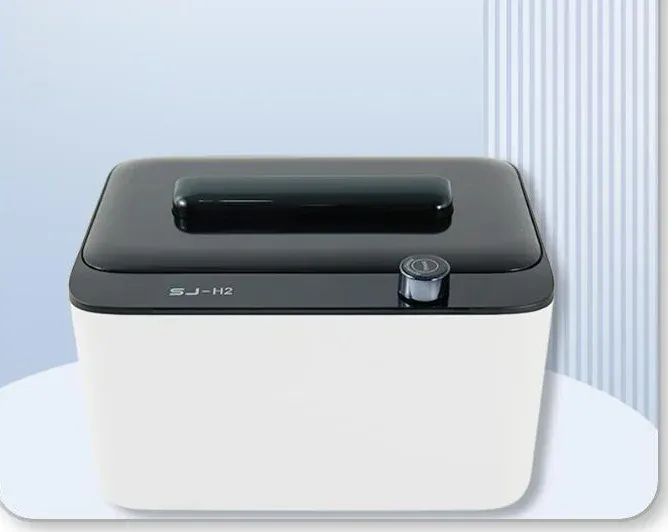
A 900 ml model suits a household that cleans several pieces at once, because the tank is wide enough for a few rings, a bracelet and a pair of earrings to lie in the water without touching each other. The SJ-H2 Ultrasonic Cleaner for Jewellery and Eyewear — 900ml is the larger home model, and it cleans a small batch in a single short cycle, which saves time when several pieces need attention. Put the pieces in so they do not touch each other, because pieces that touch can scratch each other during the cycle. Use one cycle for metal pieces, rinse them, and then run a separate cycle for any other items.
A 500 ml model is a good choice when only one or two pieces need cleaning, because it is compact enough to sit on a shelf and it uses less water for each cycle. The SJ-A2 Ultrasonic Cleaner for Jewellery and Glasses — 500ml is sized for a small batch, and it also cleans glasses in a separate cycle, which makes it a shared household tool. Use a separate cycle for jewellery and for glasses, rinse each piece after its cycle, and dry each one with a soft cloth. The compact size also makes it easy to store, and it suits a home where space is limited.
The Gentle Routine, Step by Step
Start by checking the piece and rinsing it under clean water to wash away loose dust, then fill the tank with enough clean water to cover it. Add a small amount of mild cleaner only if the instructions for your model allow it, and do not use a strong or unknown product. Place the piece in the tank, close the lid if the model has one, and run a short cycle of three to five minutes. When the cycle ends, lift the piece out, rinse it again under clean water, and lay it on a soft cloth. Do not leave jewellery soaking in the tank after the cycle, and do not run a cycle for longer than needed.
Dry the piece with a soft, lint-free cloth, and take care around the setting so you do not catch a claw on the cloth. A soft cloth removes the water and leaves the metal bright, while a rough cloth can leave fine marks. Let the piece air dry for a few minutes before you wear it or put it away, and store it in a soft pouch or a lined box so it does not rub against other pieces. A short cycle once in a while, with a rinse and a soft dry, is enough to keep most jewellery bright between professional cleans.
A short ultrasonic cycle, a check of the setting before and after, and a soft dry are enough to keep most jewellery bright at home. Choose a tank that fits the pieces you wear, use plain water or a mild cleaner, and keep the pieces that do not belong in the cleaner out of it. Used gently and with the right pieces, a home ultrasonic cleaner keeps rings, chains and earrings clearer and brighter for longer, without harsh scrubbing.
Looking for a home ultrasonic cleaner — or stocking them for your store? Send an inquiry through the form on this page and we will reply with specifications and a quotation. Mob / WhatsApp / WeChat: +86 15920036975. Private label and OEM are available from 300 units.