Home Cleaning
Ultrasonic Cleaners for Dentures
An ultrasonic denture cleaner lifts biofilm and stains with short sound-driven cycles. Learn how it works and what to expect at home.
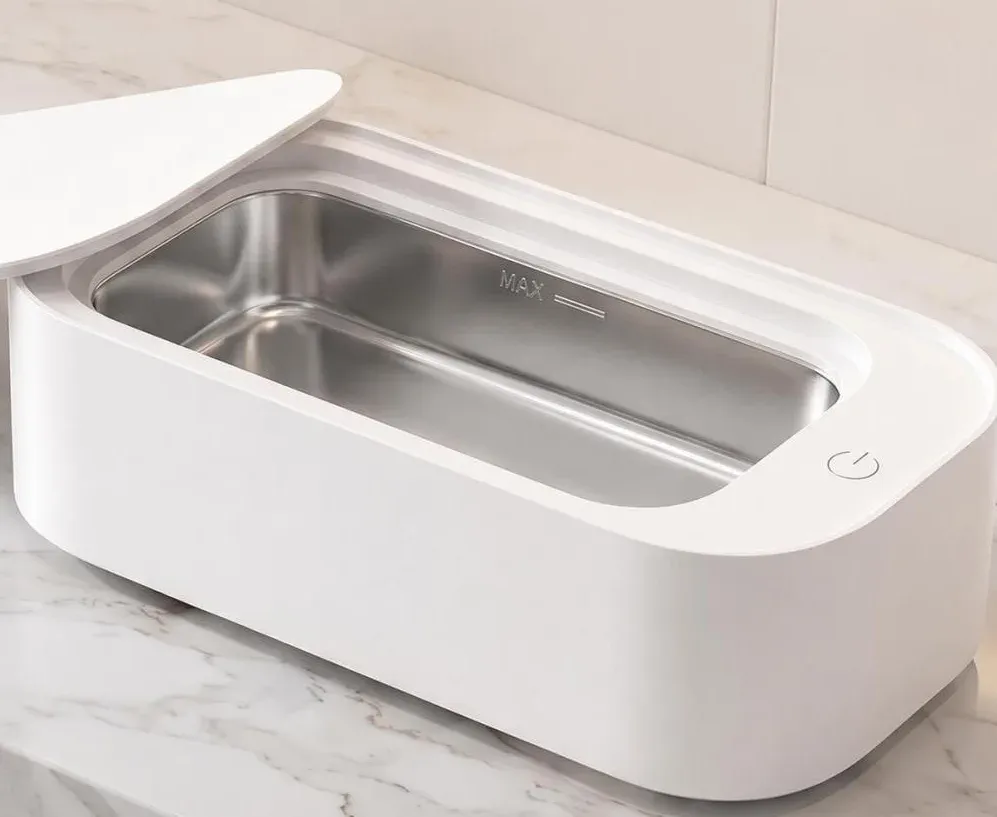
A denture that looks clean can still carry a thin film of plaque, food residue and the bacteria that cause odour. Brushing reaches the broad surfaces, but the small curves, the underside of a plate and the area around clasps are harder to reach, and that is where build-up settles first. An ultrasonic denture cleaner offers a different approach: it uses fine, sound-driven movement in water to loosen what sits in those small spaces, without scrubbing the surface. This guide explains how an ultrasonic denture cleaner works, what it can and cannot do, and what to expect when you use one at home, so you can decide whether a short daily cycle fits your routine.
Dentures collect residue for the same reason natural teeth do. Saliva, food and drink leave a film on every surface, and the warm, moist space between a denture and the gum gives bacteria time to settle. Tea and coffee add colour to that film, and tobacco smoke can deepen it further, so a denture that is brushed only on its outer face can slowly lose its fresh appearance. The problem is not a lack of effort; it is that a brush cannot reach into every groove. A short ultrasonic cycle is designed for those grooves, and it works best when it is part of a regular routine rather than a rescue step used once in a while.
How an Ultrasonic Denture Cleaner Works
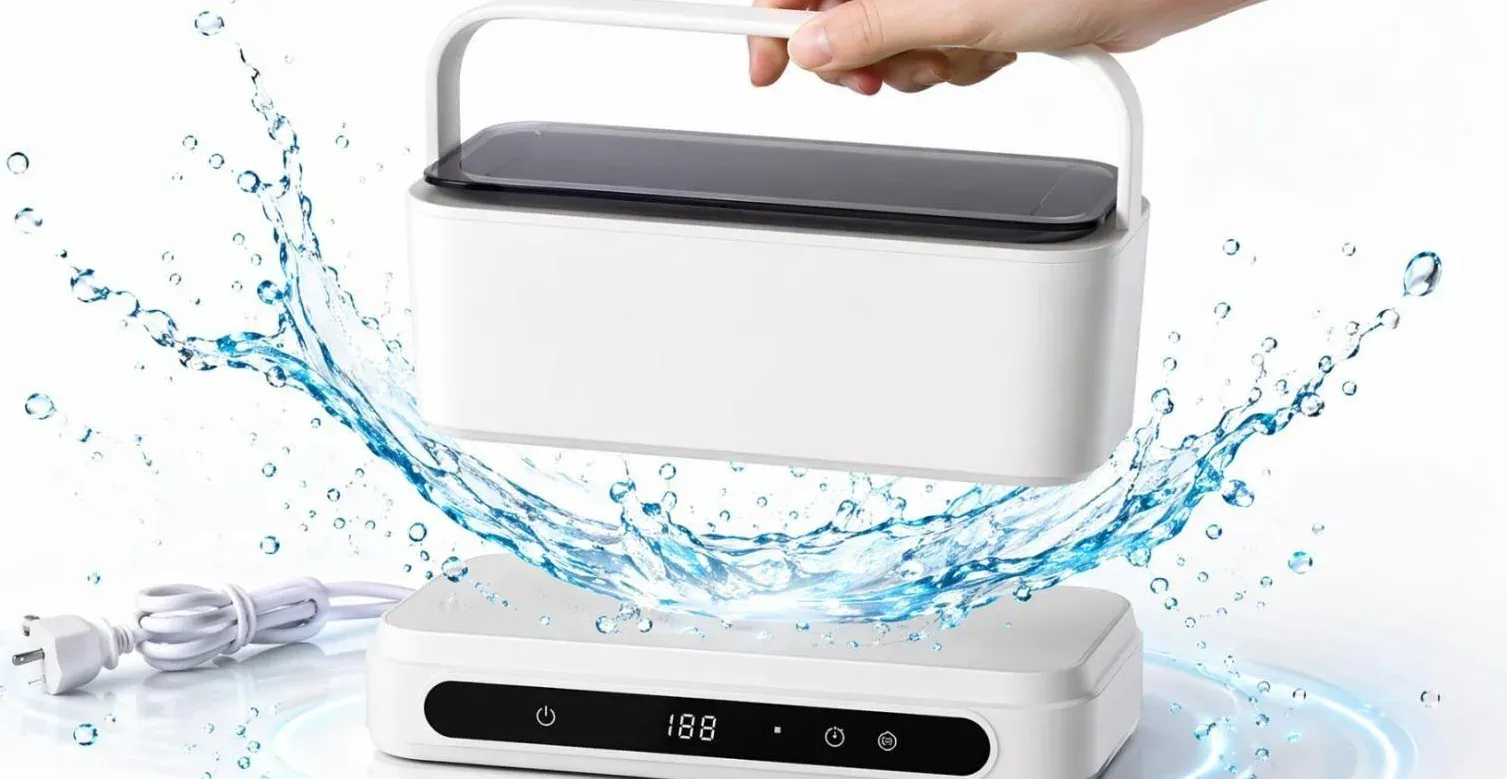
An ultrasonic cleaner sends rapid sound waves through water, and those waves create tiny bubbles that form and collapse many times a second. The collapse produces a fine scrubbing action on any surface the water touches, including the curves and grooves a brush misses. The denture itself does not move, and nothing sharp touches it; the water and the bubbles do the work. A typical home cycle runs for a few minutes, which is long enough for the bubbles to reach the film on a denture without soaking it for hours. After the cycle, the loosened residue is rinsed away under clean water, and the denture is ready to wear or to store.
The film that builds on a denture is a mix of saliva proteins, food particles and bacteria, and it is this film that holds odour and dulls the surface. Tea, coffee and tobacco add colour to the film, so a denture can look stained even when it has been brushed. An ultrasonic cycle loosens the film from the surface, including from the small spaces around clasps and from the underside of a full plate, where a brush rarely reaches. The cycle does not bleach the denture or change its colour; it removes the residue that sits on the surface, so the denture looks closer to how it looked when it was clean. For a stain that has set deeply into the material, a cycle may lighten it but not remove it completely, and a dentist can advise on the next step.
A 400 ml Model and a 148 ml Model
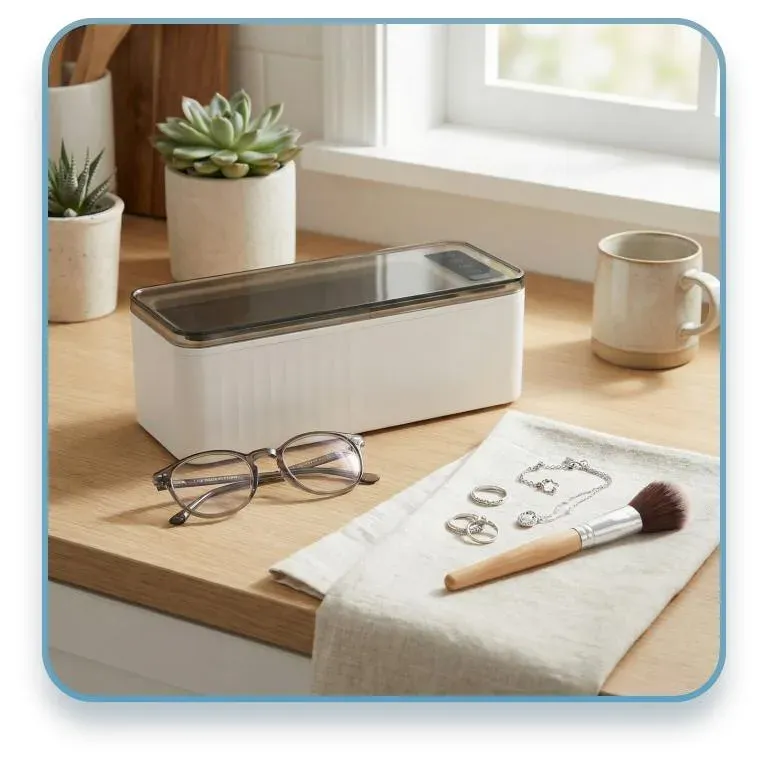
A 400 ml model suits a household that cleans a full denture, because the tank is wide enough for a plate to lie flat in the water. The SJ-A7 Ultrasonic Cleaner for Dentures and Jewellery — 400ml has a 304 stainless steel tank, and the wider tank also leaves room to clean jewellery in a separate cycle, which makes it a shared household tool. Use a separate cycle for each type of item, rinse each one after its cycle, and do not mix items that could scratch each other. The larger tank is also useful when more than one person in the household wears a denture or a retainer, because each appliance can be cleaned in its own cycle without waiting for a smaller tank to be emptied and refilled.
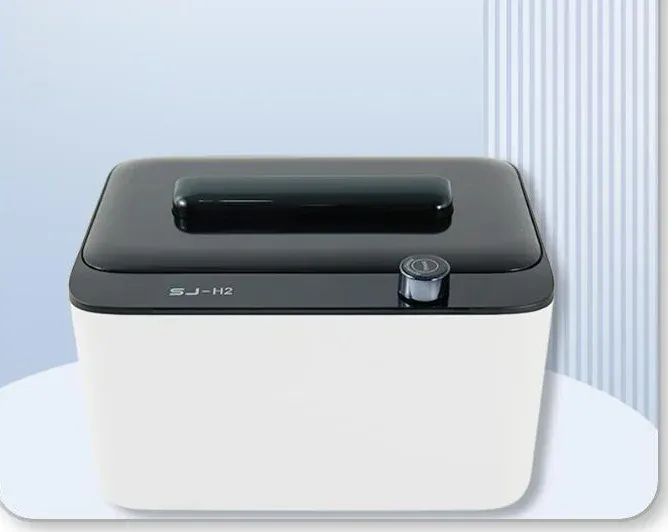
A 148 ml model is a good choice when only one denture or one retainer needs cleaning, because it is compact enough to sit on a bathroom shelf and it uses less water for each cycle. The SJ-H7 Ultrasonic Cleaner for Dentures and Aligners — 148ml is sized for a single appliance at a time, and its small tank means the appliance is covered by water without a long soak. Fill the tank with enough clean water to cover the denture, run a short cycle, then rinse and dry the appliance. The compact size also makes it easy to store, and it suits a bathroom where space is limited.
Short Cycles, Not Long Soaks
A denture does not need a long soak to come clean. Short cycles repeated regularly work better than one long soak, because each cycle loosens a layer of film and the rinse between cycles carries it away. A long soak can leave a denture sitting in water that already holds loosened residue, and it does not add cleaning power once the film has been loosened. A practical rhythm is a short cycle once a day, with a rinse before and after, and a second short cycle after a meal when the denture has been worn for many hours. The routine takes only a few minutes, and it fits easily into a morning or evening habit.
Start by rinsing the denture under cool running water to wash away loose food, then fill the tank with enough clean water to cover it. Place the denture in the tank, close the lid if the model has one, and run a short cycle of three to five minutes. When the cycle ends, lift the denture out, rinse it again under clean water, and let it air dry on a clean towel before wearing it or putting it back in its case. Clean the case as well, because a damp case can hold the same residue the cleaner just removed. Rinse the case, dry it, and leave it open for a while so air can reach it.
What an Ultrasonic Cleaner Cannot Do
An ultrasonic cleaner supports daily care, but it does not replace brushing or professional care. Brushing a denture with a soft brush removes the residue that sits on the broad surfaces, and an ultrasonic cycle reaches the small spaces the brush misses; the two steps work together, and neither one replaces the other. A cleaner also does not replace a dentist. Keep your check-up appointments, and ask your dentist if a denture fits loosely, feels rough, causes sore spots, or keeps smelling after cleaning. A denture that no longer fits well needs a professional adjustment, and no home cleaning step can correct the fit.
Most rigid dentures can be cleaned in an ultrasonic cleaner, but a denture with a soft lining needs care. The soft material is more delicate than the rigid base, and it can be damaged by heat or by a harsh cleaning product. If your denture has a soft lining, ask your dentist before using an ultrasonic cleaner, and follow the advice you are given. Do not use hot water, because heat can warp a denture and change how it fits. Use cool or lukewarm water only, and keep the denture away from boiling water and dishwashers. Use only water or a cleaner made for dentures, and do not use a strong or unknown cleaning product that could leave a residue or damage the surface.
A Simple Routine to Start
A short ultrasonic cycle, a rinse before and after, and a clean case are enough to keep most dentures fresh between dental visits. Choose a tank that fits the denture you wear, use cool water and a short cycle, and let the appliance air dry before you wear it or store it. The routine takes only a few minutes a day, and it fits easily into a morning or evening habit. Used gently and regularly, a home ultrasonic cleaner keeps a denture clearer, fresher and more comfortable for longer.
Looking for a home ultrasonic cleaner — or stocking them for your store? Send an inquiry through the form on this page and we will reply with specifications and a quotation. Mob / WhatsApp / WeChat: +86 15920036975. Private label and OEM are available from 300 units.