Home Cleaning
How to Clean Retainers and Clear Aligners at Home
Learn how an ultrasonic cleaner for retainers keeps aligners fresh at home, with a simple daily routine and care tips.
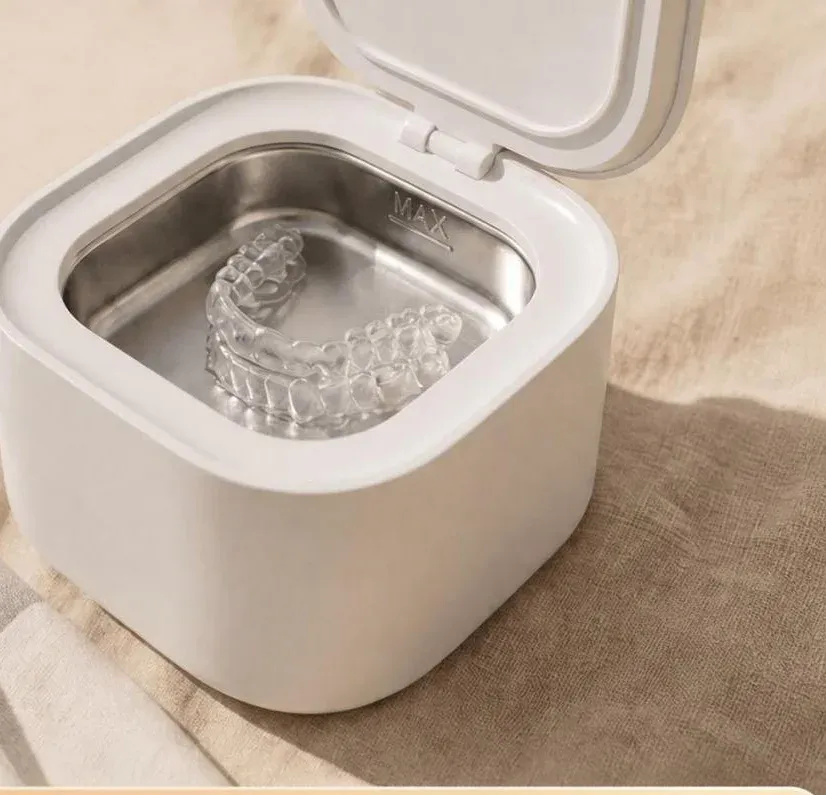
If you wear a retainer or a clear aligner, you already know the daily trade-off: the appliance that keeps your teeth in place can also collect plaque, trap odour and turn cloudy if it is not cleaned properly. An ultrasonic cleaner for retainers offers a practical way to handle that problem at home, using fine sound-driven movement in water to reach the small grooves, wire clasps and tight edges that a brush and a rinse often miss. This guide explains where retainer plaque and smell come from, how a short daily ultrasonic cycle fits into a home routine, and what to avoid so you do not damage the appliance you rely on every day.
Before choosing any cleaning method, it helps to understand what is actually building up on a retainer. Saliva carries food particles, proteins and bacteria, and a warm, damp appliance worn for many hours a day gives that residue a place to settle. Over time the film can feel slippery, look cloudy and carry a stale smell, even when the appliance has been rinsed under a tap. A quick rinse removes loose debris, but it does not reach into the fine texture of the plastic, the small bends of a wire or the underside of a Hawley plate. That is why many wearers look for a cleaning step that is both gentle and thorough, and why a short ultrasonic cycle has become a common part of a home routine.
A practical way to think about it is to separate daily upkeep from a deeper clean. Daily upkeep is the rinse, the light brush and the dry case. The deeper clean is the short ultrasonic cycle that reaches the places daily upkeep cannot. Used together, the two steps keep the appliance clearer and fresher than either step alone, and they do it without harsh scrubbing. The next sections look at the two cleaner styles most often used at home, the exact daily routine, and the mistakes that shorten the life of a retainer.
Where Retainer Plaque and Odour Come From
Odour usually follows the same build-up. A film that is left in place holds moisture and residue, and the closed case keeps air away from it. The result is a stale smell that returns even after a rinse, because the rinse has only washed the outer surface. Brushing the appliance can help, but a hard brush can scratch clear plastic and leave fine marks that collect residue more easily later. A soft brush used lightly is a safer partner to rinsing, and it works best when the deeper cleaning step has already loosened what sits in the small spaces.
Plaque on a retainer is not one thing. It starts as a thin film of saliva proteins and food residue, and bacteria settle into that film during the hours the appliance sits against the teeth. If the retainer is worn overnight, the film has a long, warm, undisturbed period to thicken. In the morning the surface may feel tacky, and a faint sour smell can appear when the case is opened. Clear aligners show the same pattern, often with a cloudy haze that makes the tray look older than it is. None of this means the wearer has done something wrong; it is the normal result of wearing a plastic appliance close to the teeth for most of the day.
Two Home Cleaner Styles for Retainers and Aligners
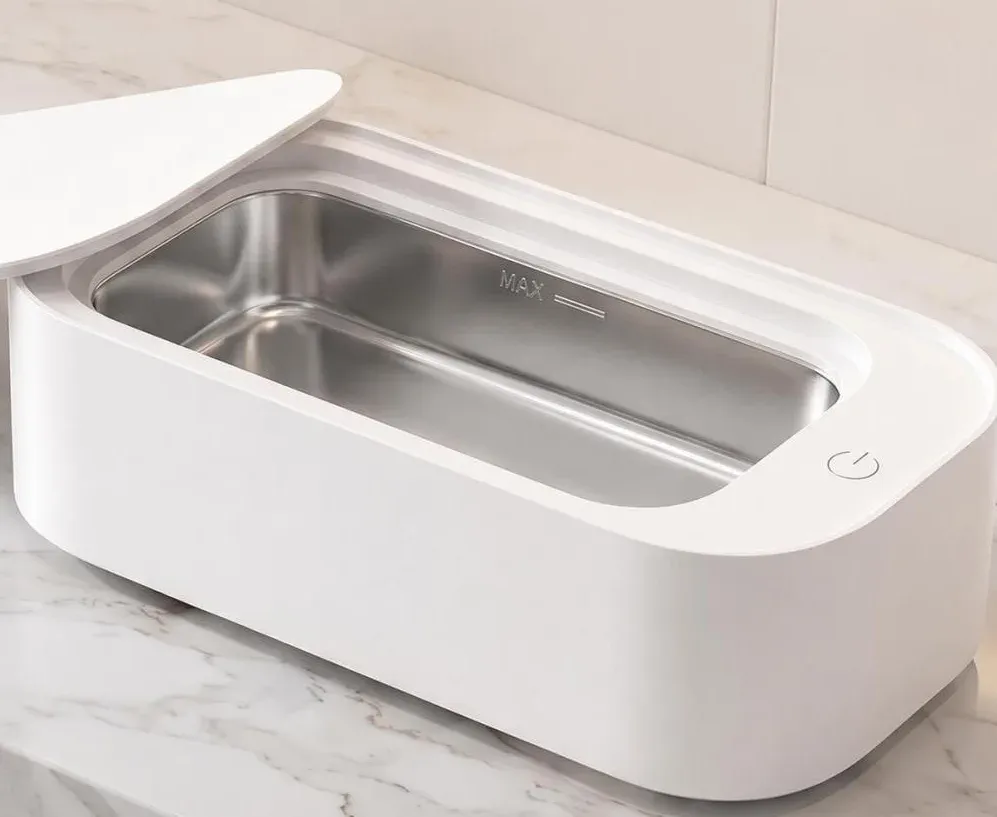
A dedicated 148 ml model is a good place to start, because it is sized for one retainer or one aligner tray at a time and it fits easily on a bathroom shelf.
The tank is small on purpose. A single tray fits flat in the water, and the cycle is short, so the appliance is not left soaking for a long time. After the cycle, lift the retainer out, rinse it under clean water, and let it air dry before it goes back in the mouth or into its case.
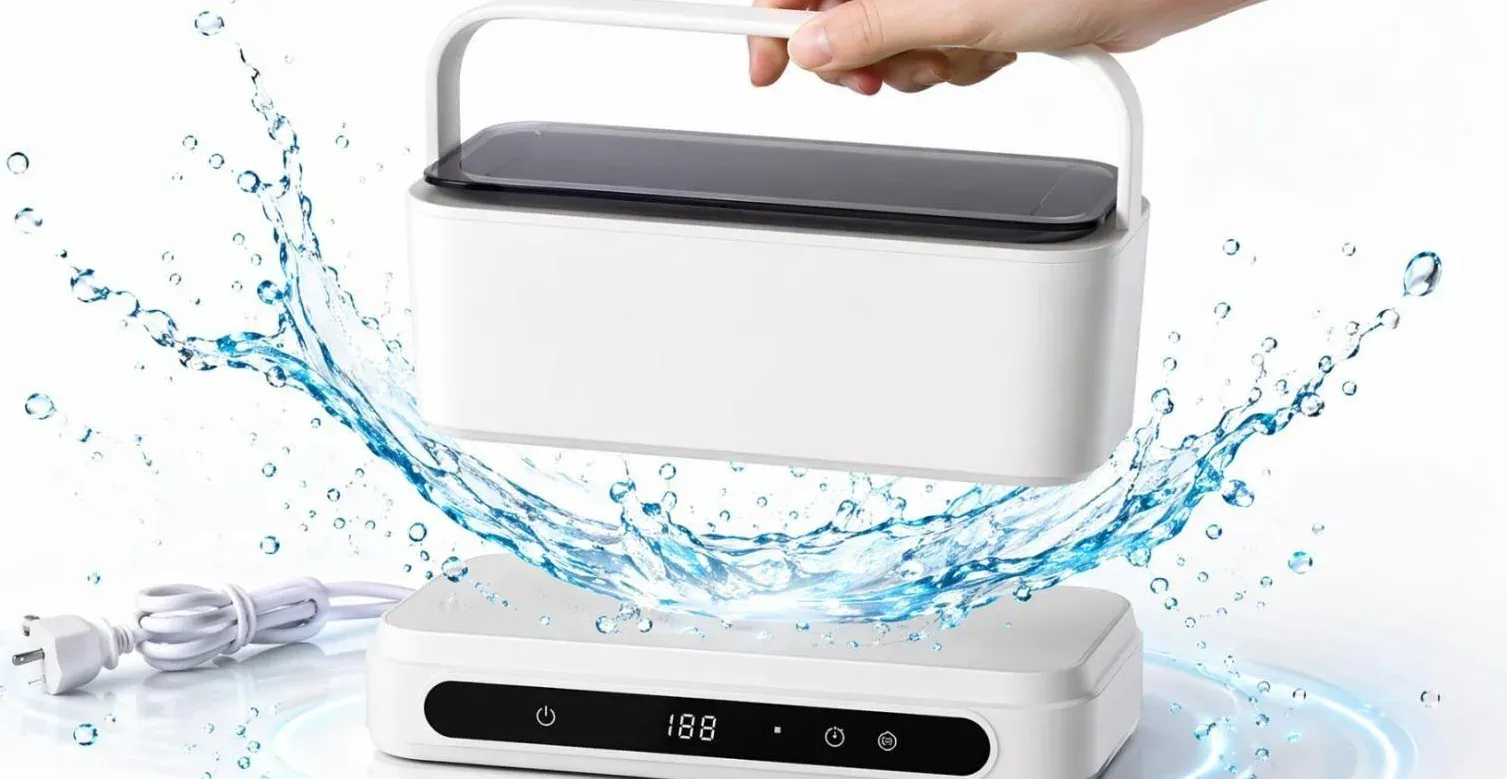
The second style is a cordless model with a built-in battery, which suits a bathroom without a free socket or a traveller who wants to clean a retainer away from home. The SJ-H8 Cordless Ultrasonic Cleaner with Titanium Tank for Retainers — 148ml runs a short cycle on battery power, so the same daily routine works even when there is no socket nearby. Charge it after use and keep it dry between cycles, and it is ready for the next morning.
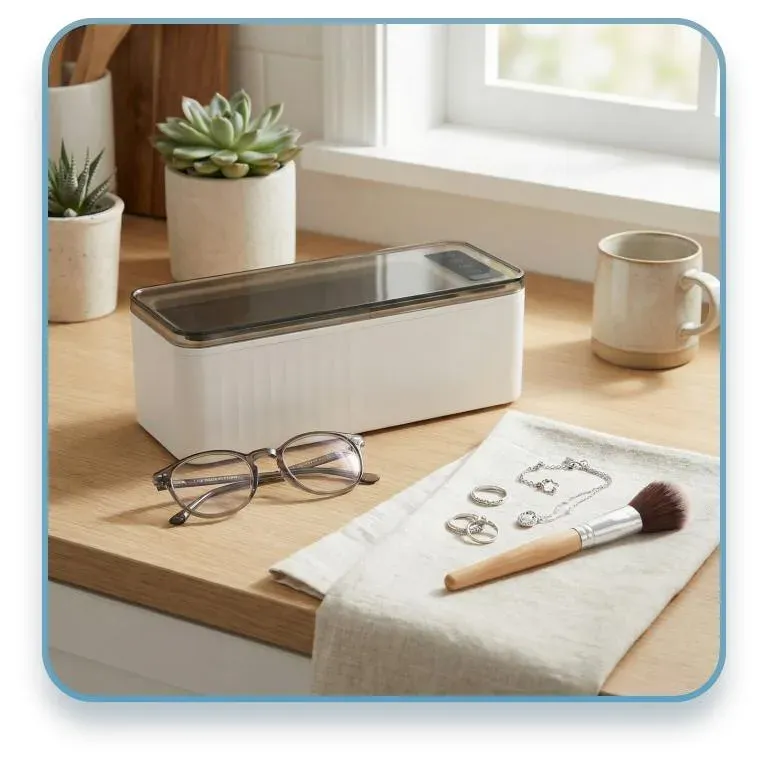
For a household where more than one person wears an appliance, a larger tank can be the practical choice. The SJ-A7 Ultrasonic Cleaner for Dentures and Jewellery — 400ml holds a denture or a retainer with room to spare, and it can also clean jewellery in a separate cycle, which makes it a shared household tool rather than a single-purpose device. Use a separate cycle for each type of item, rinse each one after its cycle, and do not mix items that could scratch each other.
The Daily Routine, Step by Step
Start by rinsing the retainer or aligner under cool running water to wash away loose residue, then fill the tank with enough clean water to cover the appliance. Place the tray in the SJ-H7 Ultrasonic Cleaner for Dentures and Aligners — 148ml, close the lid if the model has one, and run a short cycle of three to five minutes. When the cycle ends, lift the appliance out, rinse it again under clean water, and let it air dry on a clean towel before wearing it or putting it back in its case.
Clean the case as well, because a damp case can hold the same residue the cleaner just removed. Rinse the case, dry it, and leave it open for a while so air can reach it. A short cycle once a day suits most wearers, and a second short cycle after meals can help when the appliance is worn for many hours. If the tray still smells after a cycle, repeat the rinse and the cycle once more rather than reaching for a stronger product.
Mistakes to Avoid with Retainers and Aligners
Hot water is the most common mistake, because heat can warp a clear aligner or a plastic retainer and change how it fits. Use cool or lukewarm water only, and keep the appliance away from boiling water and dishwashers. Strong or unknown cleaning products are another risk: some can leave a residue, dull the surface, or irritate the mouth, so use only water or a cleaner made for oral appliances.
Do not forget the case. A case that is never cleaned can undo the work of the cleaner, so rinse it and let it dry open at least a few times a week. Finally, remember that an ultrasonic cleaner supports daily care but does not replace a dentist. Keep your check-up appointments, and ask your dentist if a retainer fits loosely, feels rough, or keeps smelling after cleaning.
Small Habit That Keeps Trays Fresh
A short daily cycle, a rinse before and after, and a clean case are enough to keep most retainers and aligners fresh between dental visits. The routine takes only a few minutes, and it fits easily into a morning or evening habit. Choose a compact model that matches the appliance you wear, use it gently, and the tray will stay clear, comfortable, and odour-free for longer.
Looking for a home ultrasonic cleaner — or stocking them for your store? Send an inquiry through the form on this page and we will reply with specifications and a quotation. Mob / WhatsApp / WeChat: +86 15920036975. Private label and OEM are available from 300 units.