Applications
How Dental Clinics Use Ultrasonic Cleaners for Instruments
Learn how a dental ultrasonic cleaner for instruments fits into clinic cleaning routines, with quiet models, baskets and repeatable timed cycles.
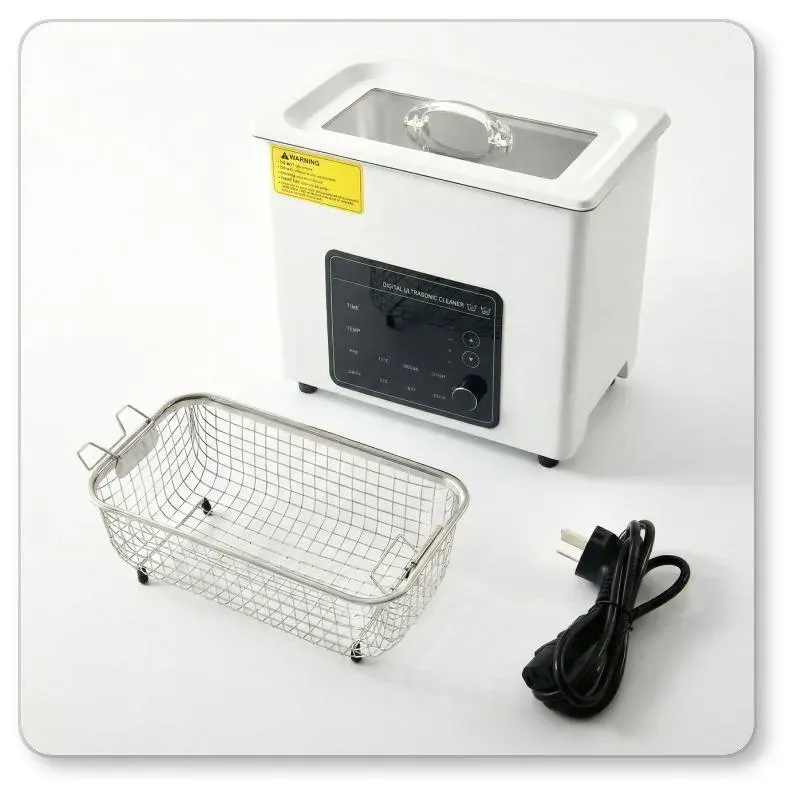
A dental clinic handles a steady flow of mirrors, probes, forceps and handpiece parts, and each one must be clean before it moves to the next stage of reprocessing. A dental ultrasonic cleaner for instruments is used at the start of that routine, to lift blood, saliva and fine debris from joints, serrations and hollow parts that a brush cannot reach. This guide explains where ultrasonic cleaning fits in a clinic, why a quiet model is often chosen for a treatment area, how instruments should be loaded, and how a timed, heated routine can be repeated in the same way by every member of the team.
Cleaning Before Sterilisation: Where Ultrasonic Fits
Instrument cleaning is a standard step before sterilisation, and it is important to keep the two steps separate in the mind of the team. Ultrasonic cleaning removes visible and hidden soil from an instrument, and it does so by loosening debris in a cleaning solution. Sterilisation is a separate, later step, carried out in a steriliser under conditions set for that equipment, and cleaning alone does not sterilise an instrument. A clinic that treats cleaning as a careful first step, and then follows its own sterilisation routine, is working in the right order, and an instrument that still carries debris into a steriliser is harder to process well.
That order also explains why a cleaning routine should be written down and followed in the same way each time. Instruments are collected after use, kept damp where the clinic routine allows, and then placed in the ultrasonic tank for a set cycle, rather than being left to dry with soil in place. After the cycle, they are rinsed, dried and inspected, and only then do they move on. The ultrasonic tank is a cleaning tool, not a substitute for the steps that follow it, and a clear routine helps the whole team use it in the same way.
Why a Quiet Model Suits a Clinic
A clinic is a working space where patients and staff need to talk, listen and concentrate, so sound matters. A quiet ultrasonic cleaner is made to run at a lower sound level than many workshop models, with models in this range operating below 60 dB, and that lower level makes it easier to place a tank in or near a treatment area without it dominating the room. The tank can run while other work continues, and staff do not have to raise their voices over it, which helps the clinic feel calm for patients who are already anxious.
A quiet model is also useful because a clinic often cleans small loads through the day, rather than one large load at the end of it. A small tank that can be run for a short, timed cycle between patients fits that rhythm, and a model that is easy to fill, empty and wipe down helps the team keep the routine going. The choice is not only about sound, but about a machine that fits the space, the workload and the working day of the clinic.
Baskets, Trays and Loading Without Overlap
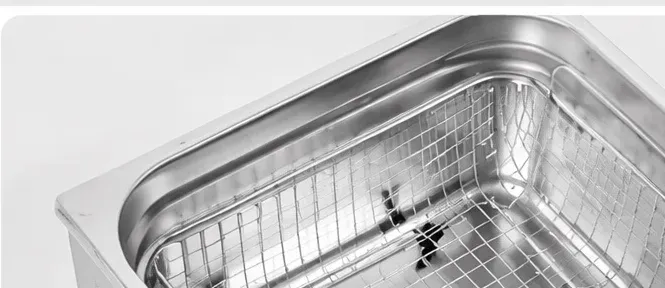
Instruments should be placed in a basket, a tray or a cassette that holds them apart from one another, and they should not be piled in a heap at the bottom of the tank. When instruments overlap, the solution cannot reach the surfaces that are hidden, and sharp points can damage other instruments or the tank. A basket keeps each piece in place, lets the solution move around it, and makes the load easy to lift out and rinse as a set. Hinged instruments should be opened where the clinic routine allows, so that the joints are exposed to the solution.
Load the basket in a single layer where possible, and keep the total load below the rim of the tank. Small items should go in a mesh holder so that they do not fall through the basket, and the basket should not touch the floor of the tank. After loading, check that nothing is pressing against the side of the tank and that the solution covers the instruments fully. A careful load takes a little longer to arrange, but it is the difference between a cycle that cleans every instrument and a cycle that cleans only the ones on top.
A Repeatable Timed and Heated Routine
A clinic routine works best when it is the same every time, and a digital timer and a heated tank help with that. Set the timer for the cycle the clinic has chosen, and set the temperature to the level suited to the cleaning solution and the instruments, following the guidance that comes with the machine and the solution. Do not guess at the time, and do not leave a cycle running longer than the routine allows, because a longer cycle is not always a better one, and a routine that is easy to repeat is easier to check.
Keep a simple record of the cycle, the solution and any instruments that needed a second pass, so that the team can see whether the routine is working. Change the solution when it is dirty, rinse the tank at the end of the working day, and keep the lid on while the tank is running to limit spray and evaporation. A routine that is timed, heated and recorded in the same way each day gives the clinic a steady standard, and it makes it easier to train new staff.
Choosing Between Quiet and Small Digital Models
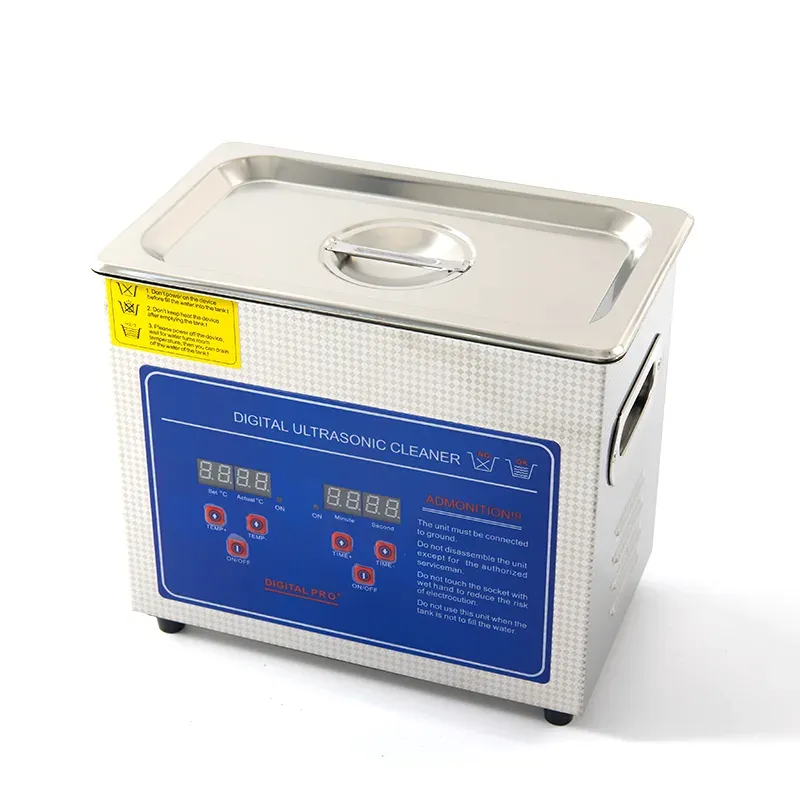
A clinic that needs a larger tank for a full set of instruments may look at a quiet ultrasonic cleaner, with sizes in the quiet range from 1.3 L to 30 L, while a clinic that needs a small tank for a single tray or a few instruments may look at a small digital model instead. The two types can be used together, with a larger quiet tank for the main load and a small digital tank for a quick cycle between patients, and the choice depends on the space, the number of instruments and the way the clinic works through the day. A 3L digital ultrasonic cleaner is a common small size for a bench or a side room, because it is easy to place and easy to run for a short cycle.
Before choosing, think about where the tank will sit, how it will be filled and emptied, and who will run it. A tank that is easy to reach, easy to clean and quiet enough for the room is more likely to be used in the right way, every time. Ask the supplier for the full specifications of the models being considered, and check that the size, the heating and the timer suit the instruments the clinic actually uses, rather than choosing a size on a guess.
In conclusion, ultrasonic cleaning in a dental clinic is a practical, repeatable first step, and it works best when it is kept separate from the sterilisation that follows it. Choose a quiet model that suits the room, load instruments in a basket without overlap, run a timed and heated cycle in the same way each time, and rinse, dry and inspect before the instruments move on. Done in that order, the tank helps the clinic keep its instruments clean, its routine steady and its working day calm.
Planning a purchase for your business? Send an inquiry through the form on this page and we will recommend the right model with full specifications and a quotation. Mob / WhatsApp / WeChat: +86 15920036975. Private label and OEM are available from 300 units.