Applications
Ultrasonic Cleaning for Jewellery Workshops
Learn how an ultrasonic cleaner for jewellery business use helps workshops remove polish residue and stores keep pieces looking their best.
A piece of jewellery that has just been polished looks bright under the workshop lamp, and then, on a closer look, a thin film of polishing paste is still sitting in the setting, around the claws and in the fine lines of an engraving. A shop piece that has been tried on many times can look dull for a different reason, with skin oils, dust and everyday marks dulling a surface that was bright when it was first put in the window. An ultrasonic cleaner for jewellery business use helps in both places, by lifting that residue from places a cloth cannot reach, without the need to scrub a finished piece. This guide explains how workshops and retail stores use that process, which pieces need care, and how a small tank can fit into a working day.
Polishing Paste and Casting Residue in the Workshop
In a workshop, polishing paste is part of the job, and it is also one of the hardest things to remove by hand. The paste is made to cut and to shine, and it settles into the small spaces around a setting, into the back of a ring and into the lines of a pattern. A brush can move the paste, but it can also push it further into a setting, and a cloth can leave a film behind. Casting residue is similar, with fine material left in a piece after it has been cast, and that material needs to be lifted away before the piece is finished and checked.
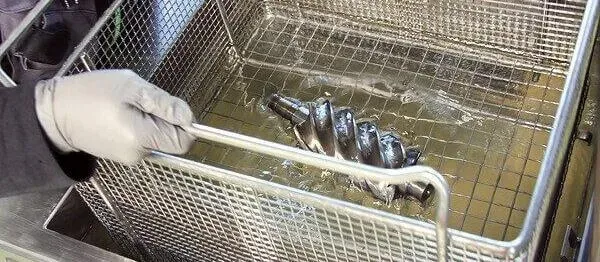
Ultrasonic cleaning works here because the solution can flow into those small spaces and the bubbles formed in the tank can loosen the residue without a tool having to touch it. The piece is placed in a basket, the tank is run for a short cycle, and the piece is lifted out and rinsed. The workshop can then see the piece clearly, check the setting and the finish, and decide whether another short cycle is needed. The process does not replace polishing, but it does make the result of polishing easier to see and easier to finish.
A 3L Digital Tank on the Workbench
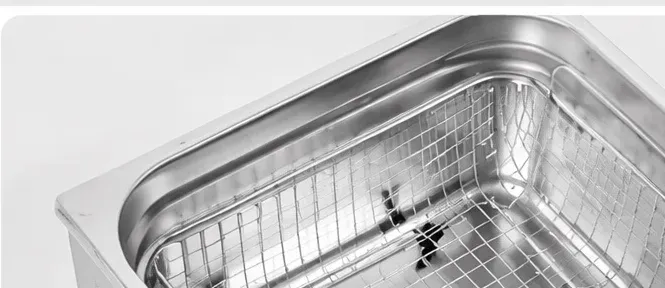
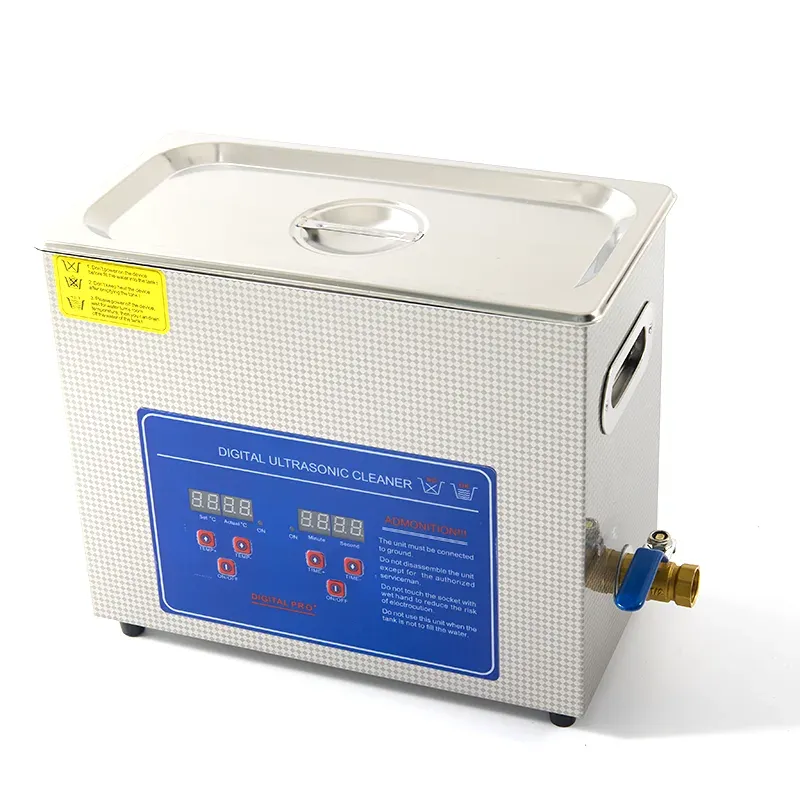
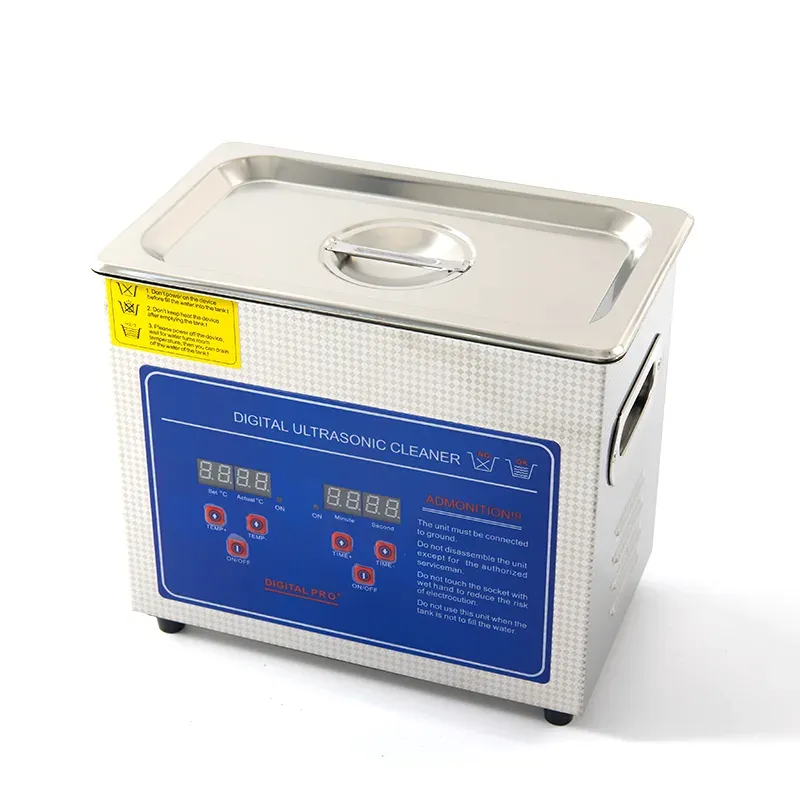
A workbench tank needs to be large enough for the pieces being cleaned, and small enough to sit on a bench without taking over the workspace. A 3L digital ultrasonic cleaner is a common size for a jewellery bench, because it holds a ring, a bracelet or a small tray of pieces in its basket, while the digital timer and heating let the operator repeat the same cycle in the same way. The tank should be filled to the level marked inside it, the basket should sit in the tank without touching the floor, and the pieces should be placed in a single layer so that the solution can reach each one.
Set the timer for a short cycle first, and check the pieces before running another one. Use a cleaning solution made for jewellery, at the dilution recommended by its maker, and change the solution when it becomes cloudy. Keep the tank covered while it is running, work in a ventilated area, and keep the mains lead clear of the liquid. A small, well-placed tank that is easy to fill, empty and wipe down is more likely to be used in the right way, every day, than a larger tank that is hard to reach.
Gems That Need Care Before Ultrasonic Cleaning
Not every gem should go into an ultrasonic tank, and a workshop or a store should be careful with any piece that has a soft, porous or fragile stone. Pearls, opals and emeralds are among the gems that need care, because they can be damaged by vibration, by heat or by a cleaning solution that would be safe for a harder stone. A pearl can lose its surface, an opal can crack, and an emerald, which often has fillings in its natural lines, can be affected by a solution or by the action of the tank. If a piece has one of these gems, or if the stone is not known, the piece should be cleaned by hand, or the workshop should ask for advice before it goes into the tank.
Other pieces also need a check before cleaning, including pieces with a glued setting, a very thin stone, a cracked stone or a piece that has been repaired. A setting that is already loose can become looser in the tank, and a stone that is already cracked can be damaged further. When in doubt, leave the piece out of the tank, clean it by hand, and note the reason so that the next person who handles it knows what was decided. Care with fragile gems is part of good jewellery work, not a reason to avoid ultrasonic cleaning altogether.
Checking Settings and Finishes After Cleaning
After a cycle, lift the basket out, rinse the pieces in clean water and dry them with a soft, lint-free cloth or with clean air. Look at each setting while the piece is still in the hand, and check that every claw is in place, that the stone does not move when it is touched gently, and that the finish is even. A piece that was dirty can hide a loose claw, and cleaning can make that looseness easier to see, which is a useful check before the piece is returned to a customer or put on display.
Check the back of the piece as well as the front, and look for any remaining paste or residue in the setting. If a piece still looks dull, run another short cycle with fresh solution, rather than scrubbing it. If a claw needs tightening, do that work before the piece is cleaned again, and keep a note of any piece that needed extra attention. A careful check after cleaning protects the customer, and it protects the workshop from a piece that leaves the bench with a problem that could have been seen.
Counter Service in a Retail Store
In a retail store, ultrasonic cleaning is often used as a counter service, where a customer brings in a piece that has been worn for a while and asks for it to be cleaned while they wait. A small household model can be used for this counter work, as a supplement to the workshop tank, because it is easy to place on a counter, easy to run for a short cycle, and easy to show a customer how the process works. An SJ-H2 ultrasonic cleaner is one small model that stores use in this way, for a quick clean of a ring or a pair of earrings while the customer is in the shop.
Counter cleaning should be done in the same careful way as workshop cleaning. Check the piece before it goes into the tank, ask the customer about any fragile stone, and do not clean a piece that has a pearl, an opal or an emerald without care. Run a short cycle, rinse and dry the piece, check the setting, and show the customer the result. A counter service that is done well can bring a customer back, and it can also show them a piece that needs a repair before it becomes a larger problem.
In conclusion, ultrasonic cleaning fits both the workshop and the shop, when it is used with care. A 3L tank on the workbench, a sensible solution, a short timed cycle and a careful check after cleaning will remove polishing paste and everyday dirt, and a small model on the counter can offer the same care to a customer who is waiting. Keep fragile gems out of the tank, check every setting, and let the clean piece speak for the work that has been done.
Planning a purchase for your business? Send an inquiry through the form on this page and we will recommend the right model with full specifications and a quotation. Mob / WhatsApp / WeChat: +86 15920036975. Private label and OEM are available from 300 units.