Degas Function in an Ultrasonic Cleaner
What does an ultrasonic cleaner with degas function actually do? Learn how degassing removes dissolved gas, steadies cavitation and protects delicate parts.
How Ultrasonic Cleaning Works: Cavitation in Brief
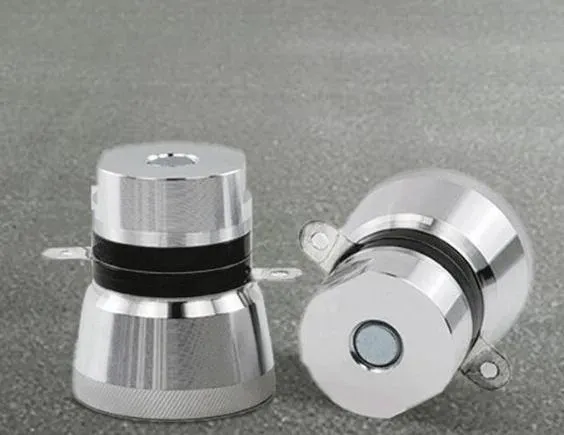
Inside the tank, a generator sends sound waves through the liquid at a frequency far above the range of human hearing. Each wave passes through alternating phases of high and low pressure, and in the low-pressure phase the liquid is pulled apart just enough for microscopic bubbles to form. In the high-pressure phase those bubbles collapse, and the collapse sends tiny jets of liquid against the surface of the part. It is that repeated formation and collapse, called cavitation, that lifts grease, dust and dried deposits away from the surface, including from small holes, threads and joints that a brush cannot reach.
For cavitation to clean evenly, the bubbles must form and collapse in a regular pattern across the whole tank. The cleaning solution and the water carry the sound waves, and anything that changes how the bubbles behave changes the result on the part. That is why the condition of the liquid matters as much as the power of the machine. Ultrasonic cleaning lifts soil from a surface; it is a cleaning process, and it should not be confused with a process that sterilises instruments, which is a separate step with its own equipment and controls.
Why Fresh Liquid Holds So Much Dissolved Gas
Water and cleaning solutions absorb air from the atmosphere whenever they are poured, stirred or heated, and a freshly filled tank is full of dissolved gas. The gas is invisible in the liquid, and it also gathers as microscopic pockets on the tank walls, on the basket and on the surface of the parts themselves. The more the liquid has been moved around, the more gas it carries, and a tank filled with cold fresh water and a new dose of cleaning solution carries the most gas of all. That is why the first cycle after a fresh fill is the one most likely to clean unevenly.
What Dissolved Gas Does to Cavitation
Gas changes the way the cavitation bubbles behave. A bubble that contains gas collapses with less force, because the gas inside it acts as a cushion, and the cleaning jets that reach the part are weaker and less regular. The effect is strongest on fine detail: the threads of a small screw, the teeth of a dental instrument and the setting of a stone are the places where a weakened collapse shows first. You may also notice more visible bubbles rising through the liquid, and a faint fizzing at the surface, which are signs that gas is coming out of the liquid instead of doing cleaning work.
The signs are easy to recognise once you know them. Results vary from one load to the next even though the settings have not changed, fine parts come out with soil still sitting in their crevices, and the liquid looks cloudy or busy with rising bubbles during the first minutes of a cycle. When those signs appear after a fresh fill, degassing is the first step to try before you change the cleaning solution, the temperature or the cycle time.
What the Degas Mode Does, and When You Need It
In degas mode, the machine runs its ultrasonic power in short pulses rather than in one continuous cleaning cycle. Each pulse shakes dissolved gas loose from the liquid, and the freed gas gathers into fine bubbles that rise to the surface and escape. After a few minutes the liquid holds far less dissolved gas, the cavitation bubbles form and collapse more evenly, and the tank is ready for parts. The tank should be empty of parts while it degasses: the point of the cycle is to prepare the liquid, not to clean, and a part sitting in the tank during degassing would only trap gas against its own surface.
The function earns its place whenever the work is delicate or repeatable. A fresh fill is the clearest case, and so is any load of precision parts: dental and laboratory instruments, optical parts, jewellery with fine settings, and small components with blind holes and narrow crevices all benefit from a liquid that has been degassed first. Where the same cycle must give the same result every time, degassing removes one source of variation before the cleaning even starts, and that steadiness is the main benefit of the feature.
There are jobs where degas matters less. A rough workshop part covered in heavy grease is cleaned mainly by heat and by the cleaning solution, and a quick rinse of a robust part will not suffer much from a liquid that still holds some gas. Even then, a short degas run does no harm, and many workshops simply run it after every fresh fill as a habit, so that the question never needs to be asked again during a busy day.
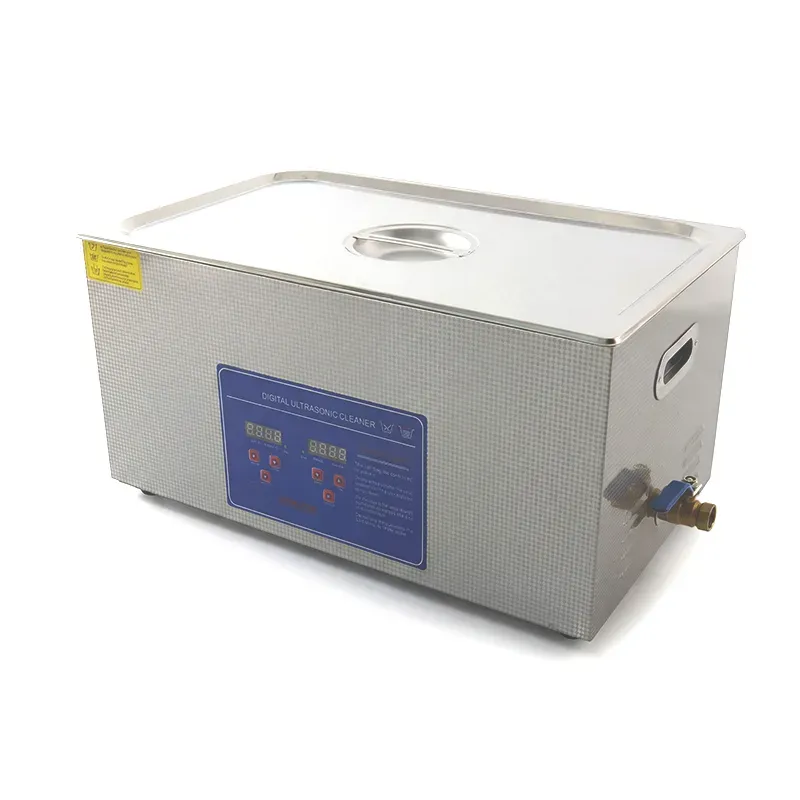
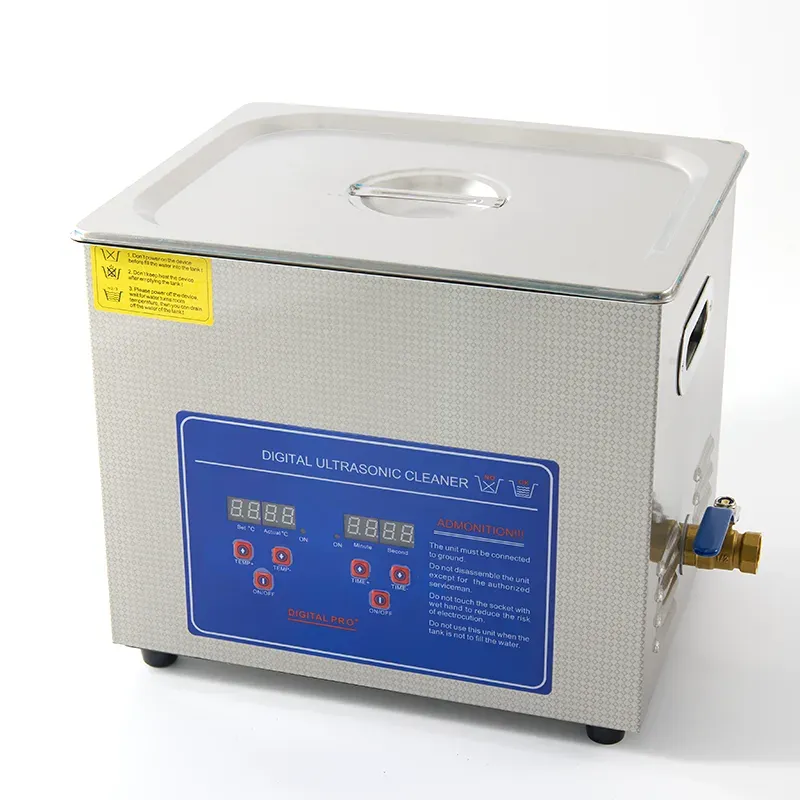
In our range, the digital models, the dual-power models and the black titanium models include a degas function, while the mechanical models do not. A 10L digital ultrasonic cleaner is a useful example of a digital model with degas, and the same function is available across the dual-power ultrasonic cleaners and the black titanium ultrasonic cleaners. If you compare models, check the specification sheet for the degas line rather than assuming that every machine with a display includes it.
How to Use Degas in a Normal Working Day
Make degassing the first step after a fresh fill. Fill the tank with water, add the cleaning solution in the amount the instructions allow, and switch the machine to its degas mode with the tank empty of parts. Let it run for a few minutes, and watch the fine bubbles rise and thin out at the surface. When the stream of bubbles slows and the liquid looks calm, the tank is ready. Load the basket, lower the parts into the liquid, and run the normal cleaning cycle at the temperature and time the job needs.
Repeat the degas run after every fresh fill, and again after the tank has stood idle for a long time or after you have topped it up with fresh water. A larger tank holds more liquid and more dissolved gas, so allow a little more time for it than for a small one. Warm liquid releases gas more readily than cold liquid, so degassing while the tank warms up is a practical habit. Keep the routine simple and repeat it the same way each time, and the cleaning results will stay steady from the first load of the day to the last.
Conclusion: A Small Step That Steadies Every Cycle
Degas is not a complicated feature, and it is not a selling point to chase for its own sake. It is a short preparation step that takes dissolved gas out of fresh liquid so that cavitation can work evenly across the tank. It matters most after a fresh fill and for delicate, precise work, and it matters least for rough parts where heat and solution do the heavy work. If your work includes dental and laboratory instruments, optical parts or fine jewellery, choose a model that includes degas, and run it before the first cycle of the day. The rest of the work will be steadier for it.
Planning a purchase for your business? Send an inquiry through the form on this page and we will recommend the right model with full specifications and a quotation. Mob / WhatsApp / WeChat: +86 15920036975. Private label and OEM are available from 300 units.