Heated vs Unheated Ultrasonic Cleaners
Do you need an ultrasonic cleaner with heater? See how heat lifts grease, which parts need warmth, and which parts are safer kept cool.
How Heat Helps: Warm Liquid, Faster Cleaning
Heat works on the soil before the sound waves do. Warm liquid is thinner than cold liquid, so it flows into small gaps more easily, and warm grease and oil soften, loosen and break into droplets that the cleaning solution can carry away. A suitable cleaning solution also works faster when warm, because the warmth helps it surround and lift oil from metal. The ultrasonic action then has an easier job: the cavitation bubbles form and collapse against soil that is already softened, instead of against hard, cold grease.
Warm liquid brings a second, smaller benefit: it holds less dissolved gas than cold liquid, so the cavitation is steadier once the tank has warmed up. Even so, heat is not a substitute for the other parts of the process. It does not replace the right cleaning solution, enough time in the tank or a load that leaves room for the liquid to circulate. A hot tank with the wrong solution, or with parts piled on top of each other, will still clean poorly. Treat heat as a helper that makes a good cleaning setup work faster, not as a fix for a poor one.
Jobs That Benefit From Heating to 80 °C
Commercial machines in our range heat the tank to 80 °C, and that range suits the greasiest workshop work. Carburettors and fuel injectors carry dried fuel deposits and oil films that soften quickly in a warm tank, and machined parts carry cutting oil and fine metal dust that a warm solution lifts more readily than a cold one. Chains, tools and engine parts with baked-on grease behave the same way: the warmth loosens the deposit first, and the ultrasonic action then carries it away from the surface and out of the threads and holes.
What 80 °C Means in Practice
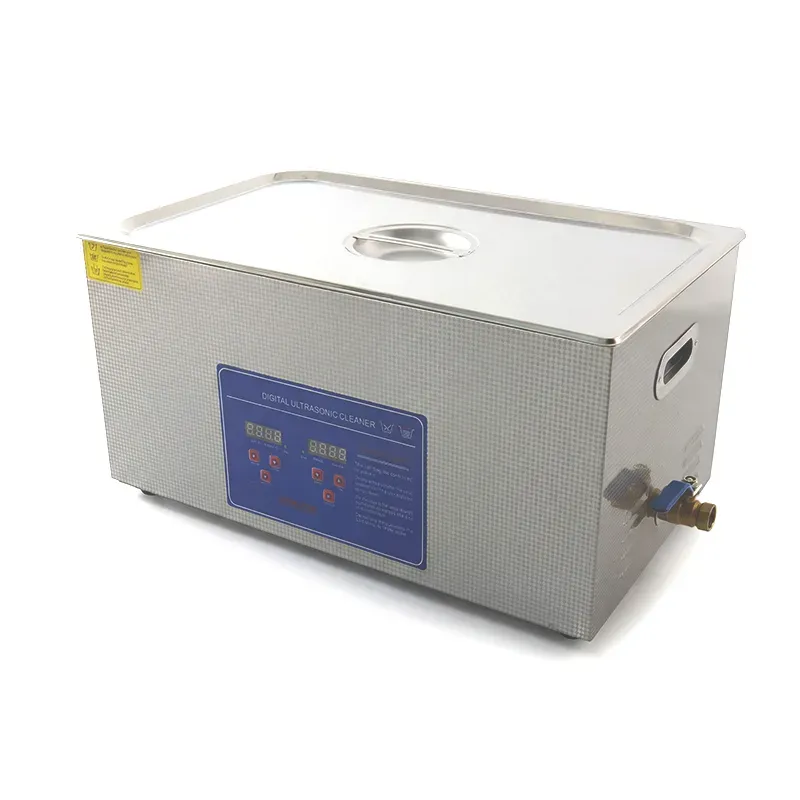
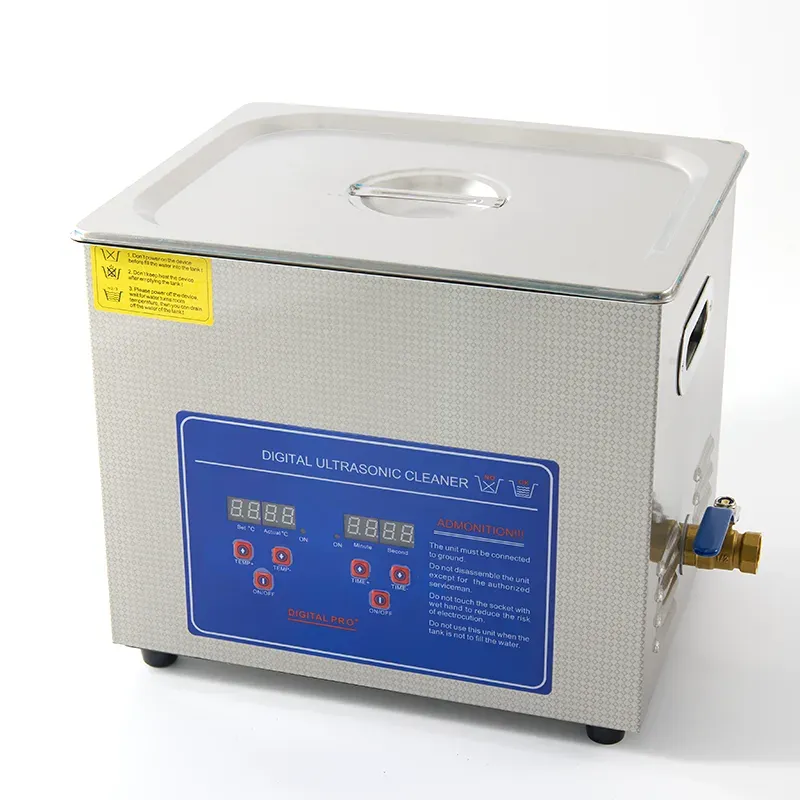
Eighty degrees is a working temperature, not a number to use for every load. A 10L digital ultrasonic cleaner holds its temperature with a digital control, so the same job can be repeated at the same warmth, while the mechanical ultrasonic cleaners reach the same 80 °C with a heater knob and a mechanical timer. In both cases, the useful habit is the same: let the tank reach the working temperature before the parts go in, so the whole cycle runs warm, and give heavily soiled parts the time they need rather than turning the temperature up further.
Parts That Are Safer Without Heat, or With Less of It
Some parts are better cleaned cool. Heat-sensitive plastics can soften, bend or lose their shape in a warm tank, and glued or assembled parts can loosen when the adhesive warms up. Certain gemstones and coated parts are also sensitive to heat: a stone held in a setting that expands, or a coating that softens with warmth, can be damaged by a temperature that a steel part would not notice. The risk is not in the sound waves, it is in the warmth, so the temperature setting deserves the same care as the choice of cleaning solution.
A Cautious Approach to Temperature
When you are unsure about a part, start cool and short. Run a brief cycle at a low temperature with a suitable solution, inspect the part, and only then decide whether more warmth or more time is needed. Keep a note of the temperature that worked for each kind of part, so the same job is repeated the same way next time. For mixed loads, sort the parts by how much heat they tolerate, and clean the heat-sensitive pieces separately at a lower temperature rather than risking them in a hot tank with the rest of the batch.
Small Home Cleaners: Why Many Have No Heater
Most small home cleaners have no heater at all, and for the work they do, that is a reasonable design choice. Glasses, jewellery and removable aligners carry light soil — skin oils, dust and toothpaste residue — that ultrasonic action and a suitable solution can remove without warmth. Leaving the heater out keeps the machine simple, compact and lower in power, and it removes one more setting for the user to get wrong. For a daily clean of personal items, the combination of sound waves, solution and time is enough.
The absence of a heater is only a drawback when the home job regularly involves grease. A small part covered in oil, a greasy watch bracelet or a kitchen tool with dried fat will clean faster in a warm tank, and for that work a small heated model is worth considering. The choice is therefore the same at home as in the workshop: match the machine to the soil. Light personal soil needs no heater; regular grease at home is a reason to choose a heated model, even a small one.
If you already own an unheated home cleaner and a greasy part comes along, you can still manage: use warm tap water to fill the tank, add the cleaning solution, and run a longer cycle, checking the part between runs. The water will cool during the cycle, so the result will not match a machine with a heater, but for an occasional greasy part it is often enough. For anything more than occasional grease, a heated model will save time and give steadier results.
Conclusion: Choose by the Soil, Not by the Feature
Heating matters when the soil is grease, oil or dried deposits, and it matters little when the soil is light dust and skin oils on small personal items. Commercial machines that heat to 80 °C earn their place on carburettors, injectors and oily machined parts, while heat-sensitive plastics, some gemstones and coated parts are safer cleaned cool or at a low temperature. Home cleaners without a heater are enough for glasses, jewellery and aligners, and a small heated model is the answer when greasy parts appear at home too. Start from the soil on your parts, choose the temperature that suits it, and the heater becomes a tool you use on purpose rather than a feature you pay for and ignore.
A quick way to decide is to look at the dirtiest part you clean in a normal week. If it is a carburettor, an injector or a machined part with cutting oil, a heated commercial machine will save you time on every cycle. If it is a pair of glasses, a ring or an aligner, an unheated home cleaner will do the job well. If your work mixes the two, keep the heat-sensitive pieces out of the hot tank and clean them separately, and let the greasy parts have the warmth they need.
Planning a purchase for your business? Send an inquiry through the form on this page and we will recommend the right model with full specifications and a quotation. Mob / WhatsApp / WeChat: +86 15920036975. Private label and OEM are available from 300 units.