Digital vs Mechanical Ultrasonic Cleaners
Digital vs mechanical ultrasonic cleaner: compare precise digital controls with simple knob controls, and see which suits dental, laboratory and workshop work.
Digital Controls: Precise, Repeatable, Easy to Check
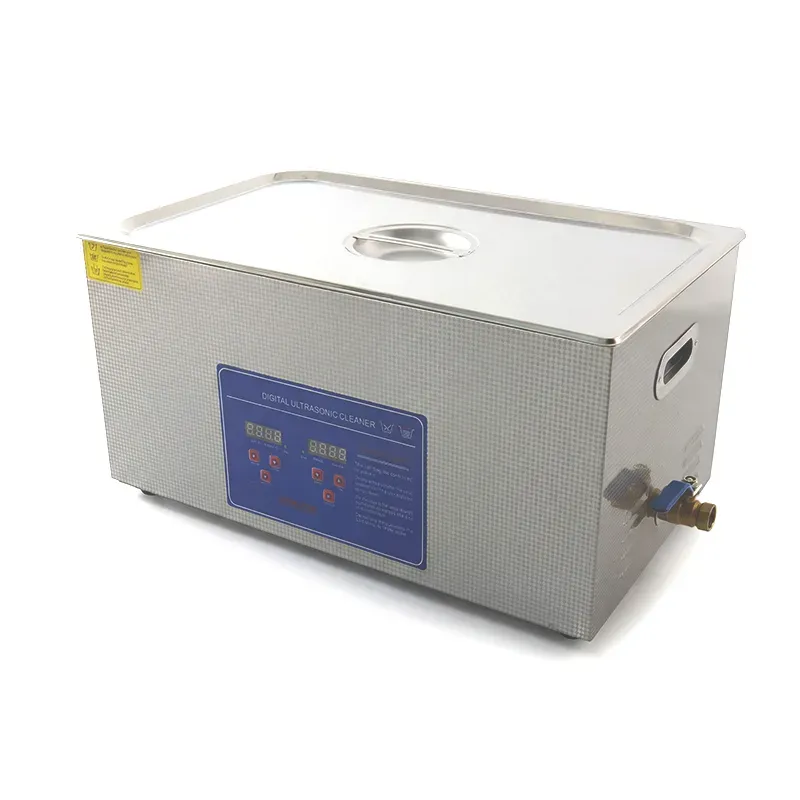
A digital cleaner is controlled through an LED display and buttons. You set the cleaning time and the temperature in exact steps, and the display shows the values you have chosen and the time left in the cycle. There is no guessing where a knob is pointing, and no need to remember a position from last time. When the cycle ends, the machine stops on its own, and the next cycle can be set to exactly the same values. That repeatability is the main strength of a digital control: the same job, run the same way, gives the same result.
Digital models also carry the degas function, which the mechanical models do not, and the display makes it easy to see that degas is running and to set the temperature the job needs. A 10L digital ultrasonic cleaner is a good example: it heats to 80 °C, includes degas, and lets the operator set the time and temperature precisely for each load. That combination suits dental and laboratory work, precision parts and any job where the process must be repeated the same way every time.
The trade-off is that a digital control asks a little more of the operator. The display and buttons need to be read and set, and a splash or a knock can damage a display more easily than it can damage a knob. In a clean, organised workspace that is rarely a problem, and most users learn the controls in a single session. Where the machine will be used by trained staff in a dental practice, a laboratory or a precision workshop, the precision of the digital control is worth the small learning step.
Mechanical Knobs: Direct, Tough, Easy to Learn
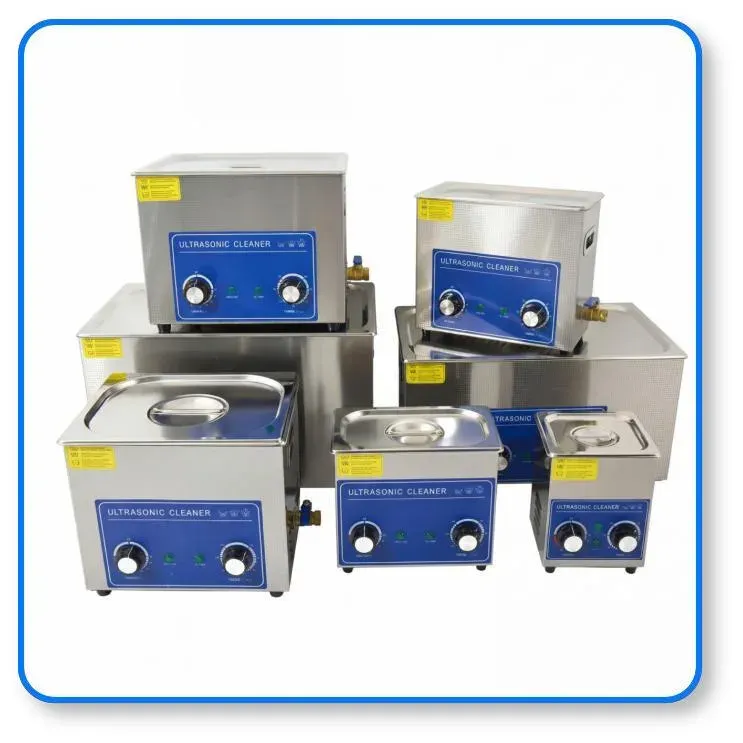
A mechanical cleaner is controlled with knobs. One knob sets the heating, another sets the mechanical timer, and the machine runs until the timer winds down. There is no display to read, no menu to learn and no button sequence to remember: turn the knobs to the positions the job needs, load the basket and let the machine run. That directness suits a busy workshop, where the operator may have greasy hands, gloves on, or no time to look at a screen.
The construction matches the controls. Mechanical models are built around a simple, sturdy structure with fewer electronic parts to fail, and they tolerate the knocks, dust and splashes of workshop life. The mechanical ultrasonic cleaners include heating and a mechanical timer only, and they do not include a degas function, so the choice is honest: a simple machine for straightforward work. For rough workshop cleaning and for buyers who need a capable machine at a lower cost, that simplicity is the point.
The Column-Lamp Variant: Mechanical Controls With Indicator Lamps
The column-lamp models are a variant of the mechanical range, with the same knob controls and the same sturdy build, plus a column of indicator lamps on the front panel. The lamps show at a glance whether the machine is powered, whether the heater is on and whether the machine is working, so the operator can check the state of a cycle from across the room without walking over to the machine.
Nothing else about the working changes: the column-lamp ultrasonic cleaners still use knobs for heating and timing, they still heat to 80 °C, and they still have no degas function. The lamps are a practical addition for a workshop where several machines run at once, or where the operator moves between benches, because the state of the machine is visible at a distance. If you like mechanical controls but want a clearer view of what the machine is doing, the column-lamp variant is the one to look at.
In practice, the lamps also help when a cycle runs long. The operator can see from the bench whether the heater is still on or the timer has finished, and can plan the next load without interrupting the machine. That small convenience adds up over a working day, especially where one person looks after several machines at once.
Three Tests Before You Choose
Three questions settle the choice. First, how often will the machine run? A machine used all day, every day, benefits from the repeatability of digital controls, because the same cycle can be repeated without drift. A machine used a few times a week for rough parts will be served well by knobs. Second, how repeatable must the process be? Dental and laboratory work, precision parts and any job with a fixed procedure need the exact time and temperature a digital control gives. Rough cleaning, where the load and the soil change every time, does not need that precision.
Who Will Operate the Machine?
Third, who will operate it? A single trained operator, or a small team that follows a written procedure, will get the most from a digital model. A workshop where many people share a machine, where gloves stay on, or where a new operator starts every few months, will get more from the directness of knobs. When the answer to all three questions points the same way, the choice is clear; when they point in different directions, weigh the one that matters most to your daily work.
Conclusion: Match the Control to the Work
Digital and mechanical cleaners both clean with ultrasonic action, and the difference is in how they are controlled. Digital controls give exact time and temperature, a degas function and a repeatable cycle, and they suit dental, laboratory and precision work. Mechanical knobs give direct operation, a sturdy build and a lower cost, with heating and a mechanical timer but no degas, and they suit rough workshop use and budget-sensitive buyers. The column-lamp models add indicator lamps to the mechanical style for workshops that need to see the machine state at a glance. Choose by how often you clean, how repeatable the process must be and who will operate the machine, and the control will fit the work.
Planning a purchase for your business? Send an inquiry through the form on this page and we will recommend the right model with full specifications and a quotation. Mob / WhatsApp / WeChat: +86 15920036975. Private label and OEM are available from 300 units.