Small Engine Carburetor Cleaning: The Ultrasonic Method
Ethanol varnish kills more mower carbs than wear does. The ultrasonic routine small-engine shops use each spring — strip, soak, cycle, blow out.
Every spring, small-engine shops meet the same customer: the mower, trimmer or generator that ran fine in October and will not start in April. Nine times out of ten the diagnosis is not wear — it is the carburetor, gummed solid by a winter of sitting in ethanol-blended fuel. The varnish that fuel leaves behind is the single biggest killer of small-engine carbs, and it is also the job ultrasonic cleaning was practically invented for. This is the routine repair shops run when the spring queue forms: faster than a rebuild kit on a hopeless carb, and far cheaper for the customer than a replacement.
Why small carbs clog first
Small-engine carburetors have the tiniest fuel passages in the business — idle jets and emulsion tubes measured in fractions of a millimetre. Ethanol fuel absorbs water, degrades over a few months of storage, and deposits varnish and gum exactly in those passages. A main jet you can clear with wire; an idle circuit furred shut inside the casting defeats sprays, dips and patience. Spray cleaner washes the outside and the easy galleries. The blockage that stops the engine starting lives where spray cannot reach — and where cavitation can.
The routine: strip, cycle, blow out
- Strip the carb properly. Off the engine, bowl off, jets out, float and needle out. Remove rubber diaphragms, gaskets and plastic parts before a long hot cycle — soft parts vary by maker, and the metal body is what needs the bath. Parts go in the basket, never on the tank floor.
- Solution and heat. A water-based alkaline carburetor solution at its labelled dilution, heated to 50–60 °C. Heat is what turns varnish from lacquer back into something bubbles can lift.
- Cycle 15–20 minutes. At 40 kHz the cavitation works through the idle circuits, emulsion tubes and galleries. Degas a fresh fill first — a gassy bath wastes the first cycle, as our degas guide explains. Truly neglected carbs may take a second cycle in fresh solution.
- Rinse, blow out, inspect. Rinse in clean water, blow every passage dry with compressed air, and hold the jets to the light. The blow-out is not optional: it clears the loosened debris the bath freed and proves each passage is open before the carb goes back together.
Which tank a small-engine bench needs
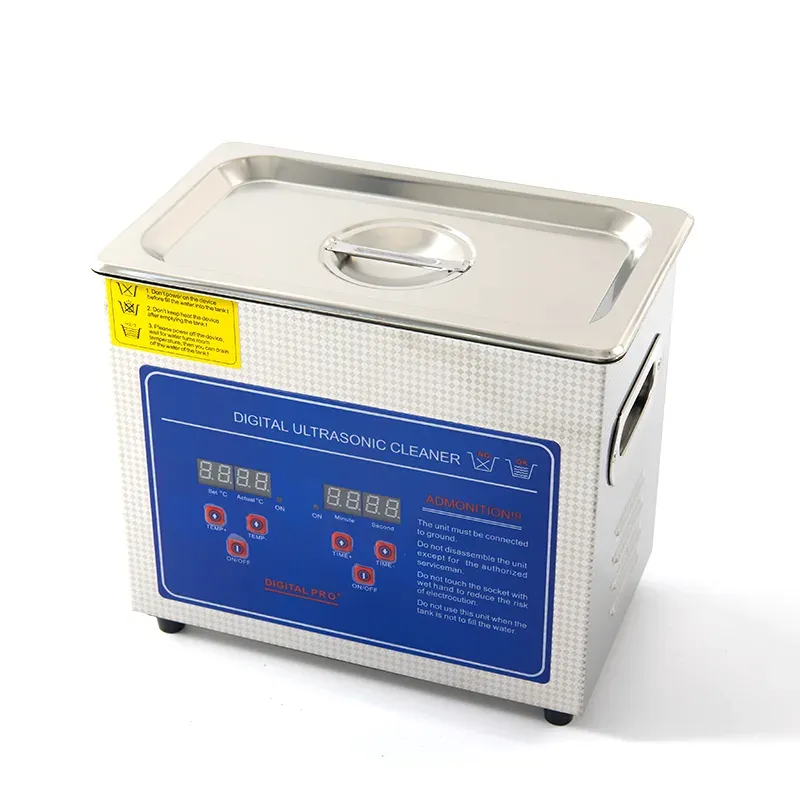
Small carbs are small parts: a mower or trimmer carb disappears into a 3 L digital tank, and a shop running several at once — the spring reality — steps up to the 6 L or the 10 L when outboard and multi-cylinder work joins the queue. Digital control earns its place here: degas for fresh fills, and a repeatable 15-minute cycle an apprentice can run identically all season. The general carburetor method, including bigger automotive work, is in our carburettor guide; the sizing logic is in the sizes guide.
The spring maths for shops
A replacement carburetor is a part the customer waits for and a margin the shop barely touches. An ultrasonic resurrection is twenty minutes of tank time, a gasket set, and a repair billed the same day — on a machine the customer keeps, with the original carburetor their engine was tuned around. Multiply by the April queue and the tank pays for itself in the season's first month; the rest of the year it earns on trimmers, saws, generators and the shop's own equipment. Rental fleets running the same routine between hires cut their no-start returns the same way.
Tell us your spring queue
Mowers, saws, generators, a rental fleet — send us the mix and how many carbs a day you face in season, and we will specify the tank in writing, dimensions and power included. Digital heated tanks run 3–50 L, with private label from 300 units for tool and equipment distributors. Enquire through the contact page, or call or message us — Mob / WhatsApp / WeChat: +86 15920036975.