Best Ultrasonic Cleaner: Choose by What You Clean
Forget ranked lists. The best ultrasonic cleaner is the one matched to your item, soil and workload — a selector for retainers, jewellery, carbs and more.
Search "best ultrasonic cleaner" and you will find ranked lists written to earn commission, where the winner is whichever brand pays — and where a retainer pod and a 30 L workshop tank are scored as if they were rivals. They are not. The best ultrasonic cleaner is the one matched to three things: what goes in it, what soil comes off it, and how much of it you clean in a day. Answer those and the "best" model usually selects itself. This guide is the selector: the four questions that decide every purchase, then the right format for each of the jobs people actually buy these machines for.
The four questions that decide everything
- How big is the item? The tank's internal dimensions — not its litres — must fit the part submerged in its basket. Our sizes guide shows the real dimensions from 86 mm pods to a 565 mm long tank.
- How stubborn is the soil? Dust and daily film need bubbles alone. Grease, varnish and polishing compound need heating (to 80 °C on commercial models) and the right solution.
- How precise is the work? Clinical, electronic and high-value parts need degas for even cavitation and a frequency matched to the item — 45–50 kHz gentle for home items, 40 kHz for workshop work.
- How much per day? One item a day suits a pod. A queue of instruments or a bench of carburettors wants a bigger tank, a drain valve and a heater that keeps up.
Best for retainers and aligners: a pod
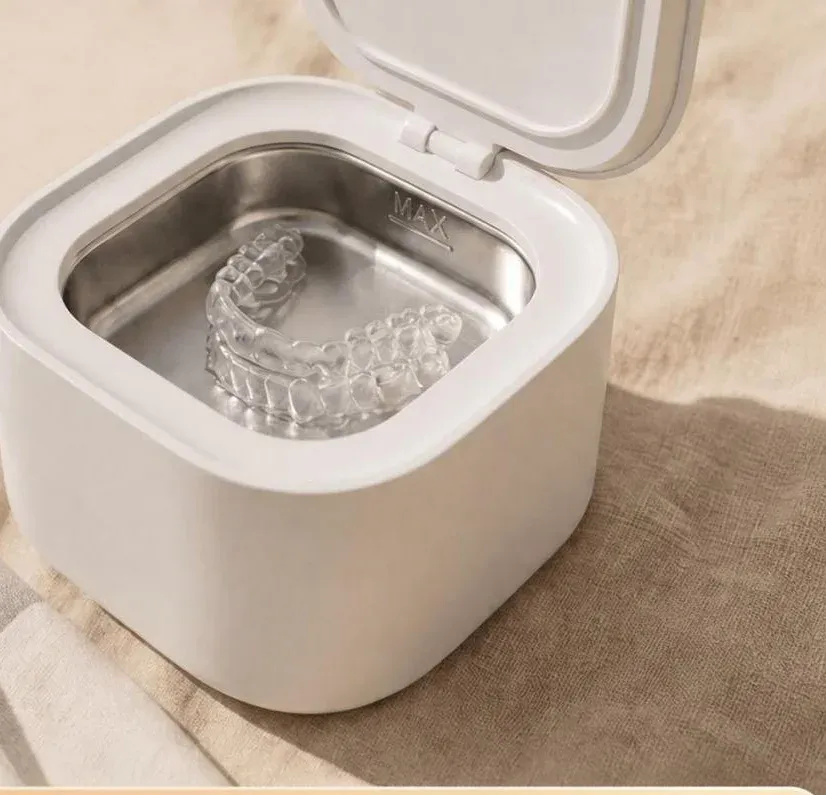
The job is one thin appliance, daily, in plain water. The best format is a dedicated pod with a shallow tank shaped to the appliance — 148 ml, three-to-five-minute cycles. Wearers who want the extra feature should look at the UV-lamp models; travellers, at the cordless one. Our retainer guide covers the routine, and the UV pod is the pick of the format. Anything bigger is not better here — it is just slower to fill.
Best for jewellery: two different answers
At home, the best jewellery cleaner is a 500 ml–1 L unit at 45–50 kHz: rings, chains and glasses in three to five minutes, gentle enough for weekly use. In a workshop that cleans customers' pieces after polishing, the best answer jumps to a 3 L digital bench tank with heating, because polishing compound needs warm solution and the throughput is commercial. The workshop guide explains that bench setup; the 900 ml home model is our home pick.
Best for carburettors and engine parts: heated digital, 6–10 L
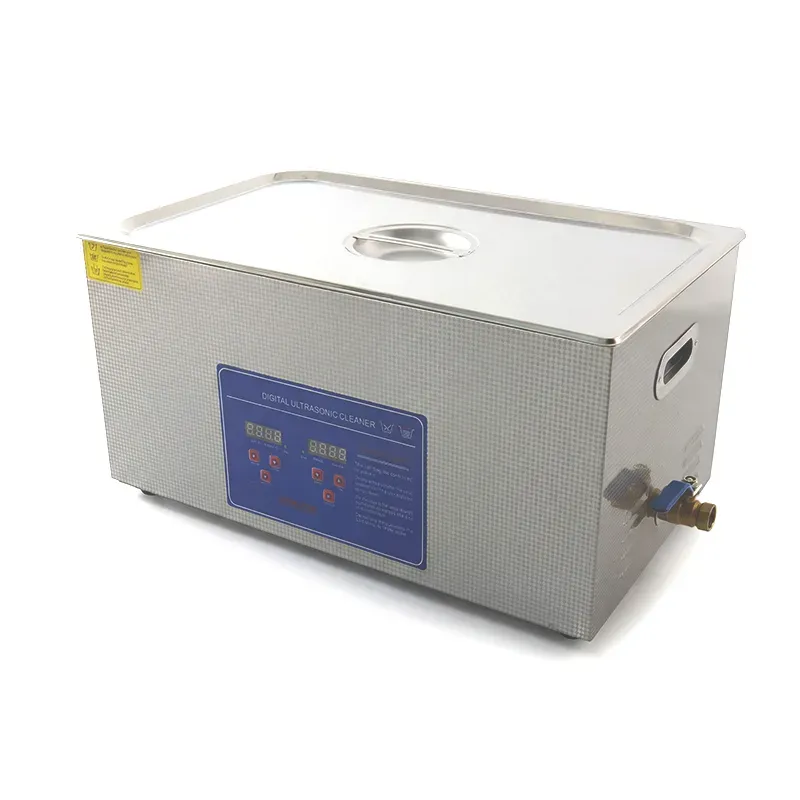
This is the job that built the category's reputation. Varnish and gum demand a strong alkaline solution at 60–80 °C, degas on fresh fills, and a tank that takes the whole carb body. For most garages that resolves to the 10 L digital tank; multi-carb specialists and bike shops running daily queues step up to 15–30 L. The method is in our carburettor guide. A mechanical model is the acceptable budget alternative here — heavy soil forgives approximate timing — but it gives up degas.
Best for records, clinics and quiet rooms
Some "bests" are formats, not sizes. Vinyl needs the record machine: a 300 mm tank and a rotating bracket, a shape no general tank imitates. Dental and tattoo studios need the opposite of workshop thinking — a compact digital tank under 60 dB, because it runs metres from the patient chair; that is exactly the brief our quiet model was built to, and the clinics guide sets out the pre-sterilisation workflow around it.
Best for heavy workshop throughput: 30–50 L
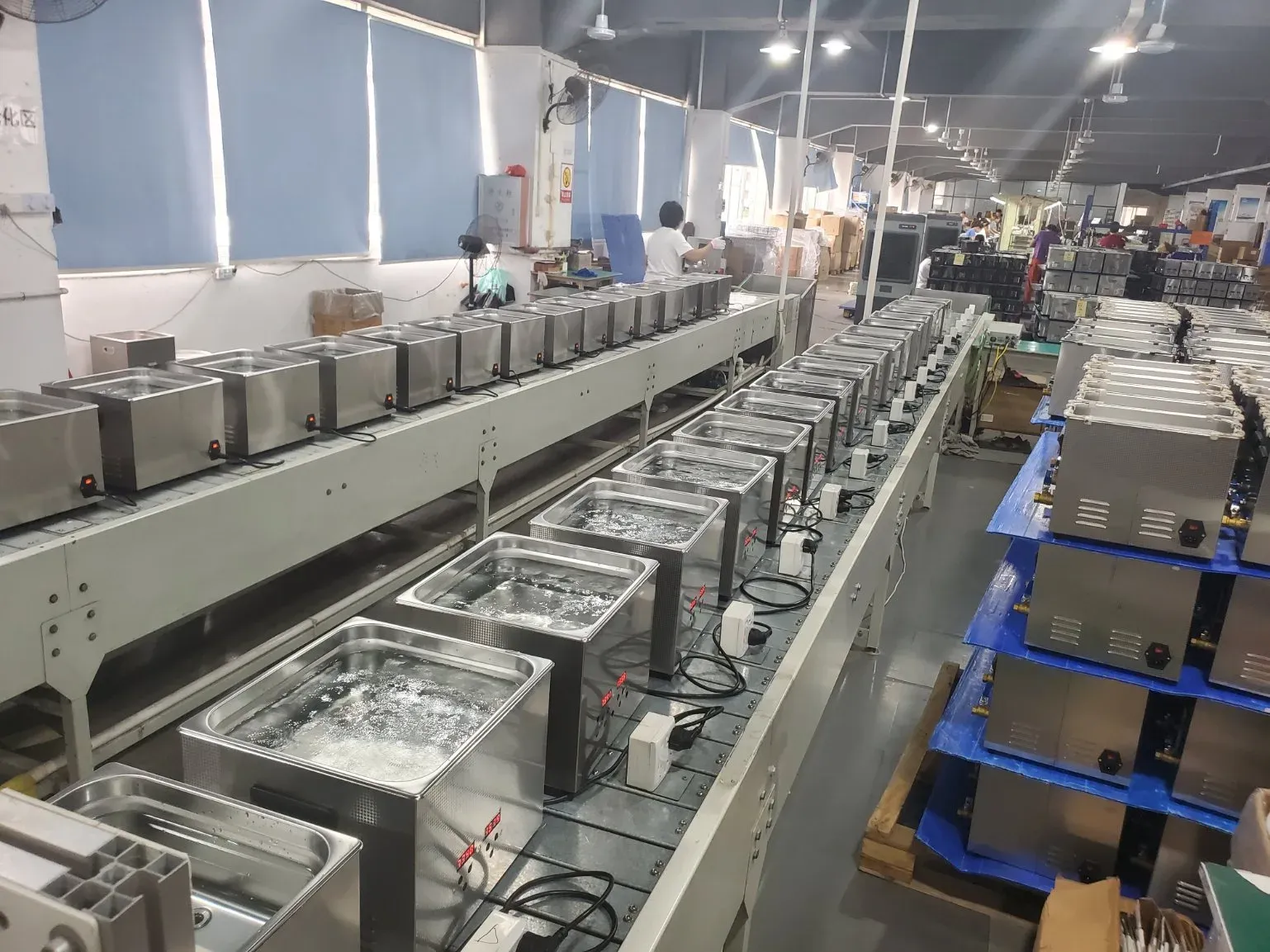
When the queue is cylinder heads, housings and batches of parts, the best cleaner is the one whose heater and tank stop being the bottleneck: 30 L for batch work, and the 50 L long tank — 840 W of ultrasound, 1,500 W of heating, on casters — for long parts and all-day running. At this size a drain valve stops being a feature and becomes a safety requirement; nobody tips 40 litres by hand.
The answer the lists never give
Every "best" above is a match, not a trophy. The pod beats the 50 L tank for a retainer; the 50 L tank beats the pod for a cylinder head; and the most expensive mistake in this category is buying the impressive machine for a job the small one does better. Decide the item, the soil and the daily count first — the model follows.
Tell us your three answers
Send us what you clean, what comes off it, and how much of it arrives each day, and we will name the model we would buy in your position — home pods from 148 ml, commercial tanks to 50 L, private label from 300 units for sellers building their own line. Enquire through the contact page, or call or message us — Mob / WhatsApp / WeChat: +86 15920036975.