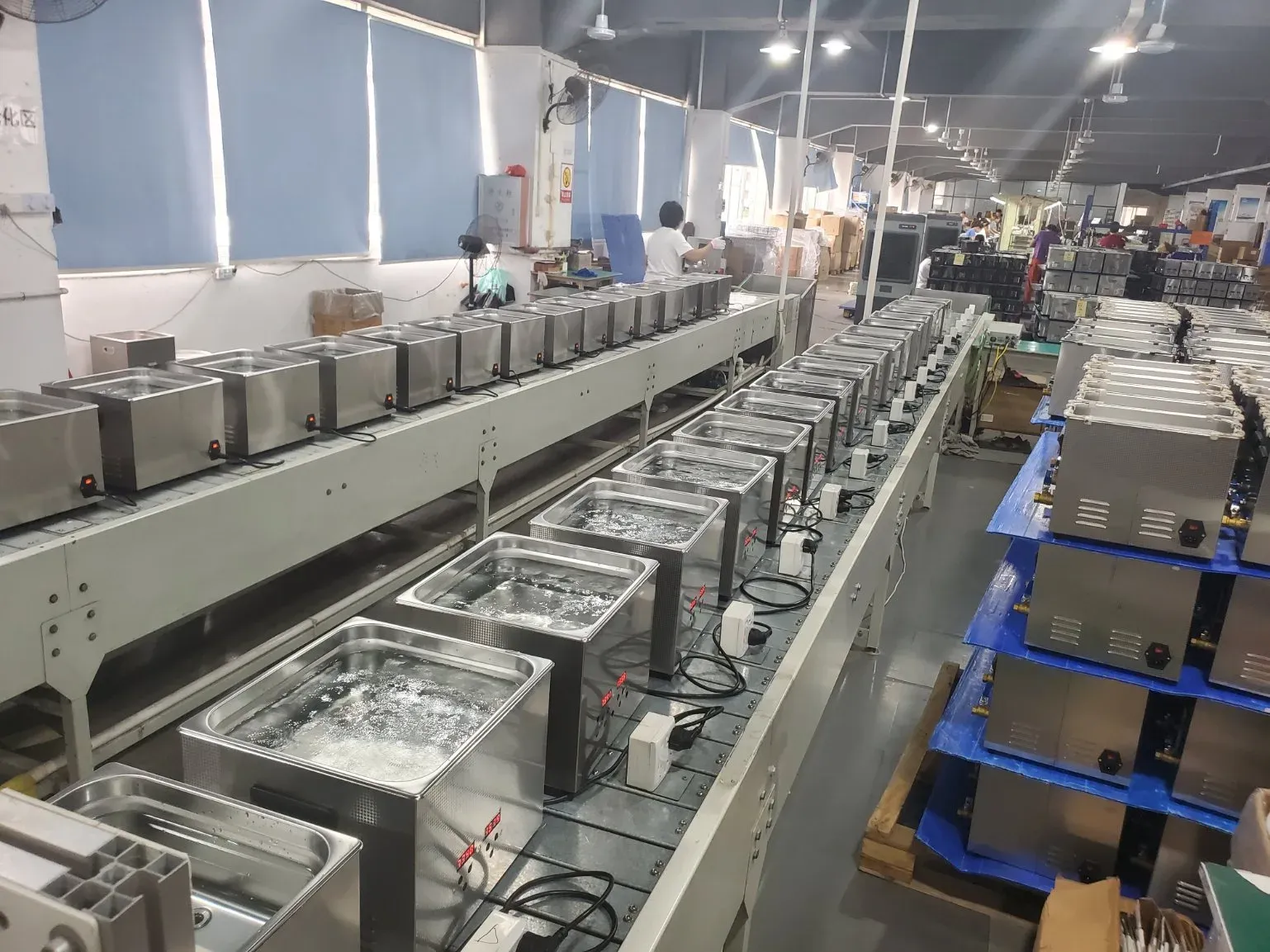
Large Ultrasonic Cleaner: Choosing 15L, 30L or 50L
Large ultrasonic cleaner searches are up 170%. When a workshop outgrows 10L, how 15L, 30L and 50L tanks differ in power, size and daily throughput.
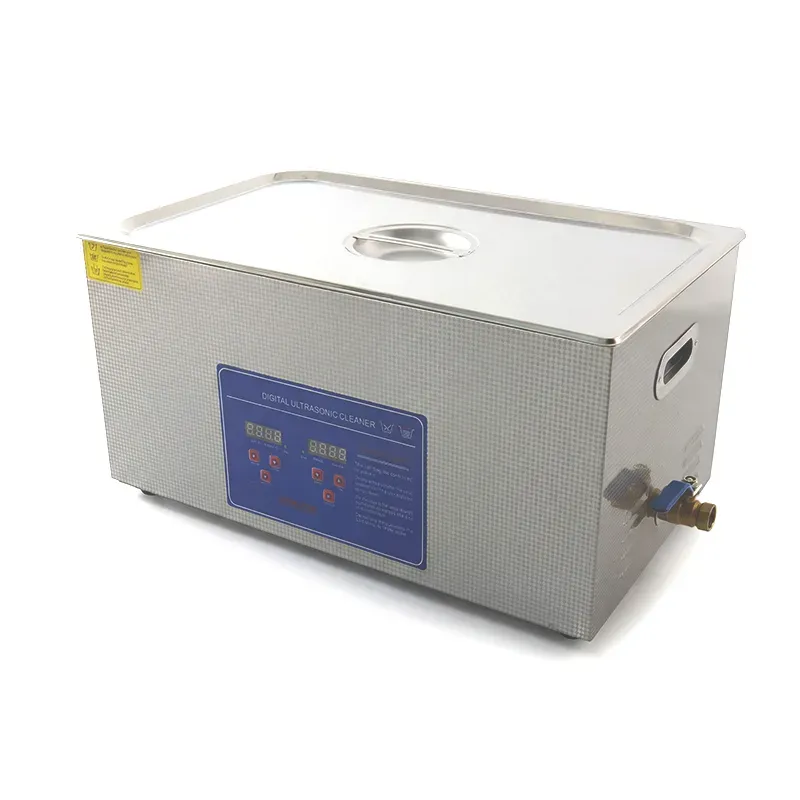
Every workshop that cleans seriously reaches the same morning: the 10 L tank is running its third back-to-back load, two more jobs are queued on the bench, and the cleaner — not the technician — has become the bottleneck. Searches for "large ultrasonic cleaner" are up about 170% in a year, and they are mostly that morning, typed into Google. Stepping up is not just buying a bigger box: the 15 L, 30 L and 50 L formats differ in power, in the shape of work they swallow, and in how a cleaning line actually flows. Here is how to choose between them.
First, outgrow honestly: is it size or is it heat?
A queue at the tank has two causes. If parts fit but cycles run long, the limit is usually heating and soil load — a bigger heater and fresh solution may fix it. If parts physically queue because they do not fit, or batches split into three loads, the limit is volume, and only a larger tank fixes it. Check your largest regular part against internal tank dimensions, not litres — the method is in our sizes guide. Buy for the part and the queue you have weekly, not the biggest job you did once.
The 15L: the busy bench's step up
The 15 L digital tank runs 360 W of ultrasound from six transducers with 450 W of heating — half as much power again as the 10 L, in a tank that swallows multi-carburettor sets, small cylinder heads and batch loads of instruments in one cycle instead of two. For a single-bench garage, a dental or veterinary lab running instrument batches, or a jeweller's workshop serving a retail counter, 15 L is usually the end of the queue without changing how the bench is laid out. It is the step up that still behaves like a bench tool.
The 30L: when cleaning becomes a station
At 30 L the numbers double down: 600 W of ultrasound across ten transducers, 600 W of heating, and a tank that takes engine housings, gearbox cases and full racks of parts. What changes at this size is workflow, not just capacity: the tank stops travelling to the work and the work starts travelling to the tank. Parts arrive in baskets, run 15–20 minute heated cycles with degas on fresh fills, and drain through the valve — nobody lifts 30 litres. Multi-bay garages, machine shops and remanufacturers live here, often running the 30 L as the main bath beside a smaller tank for delicate work.
The 50L: length, and all-day running
The 50 L exists for the parts nothing else takes: its tank runs 565 mm long, with 840 W of ultrasound and 1,500 W of heating to bring that volume to working temperature and hold it through a shift. It stands on casters, because a filled 50 L tank is furniture, not equipment you reposition by hand. Long shafts, exhaust components, industrial moulds and all-day batch lines are its natural work. The honest cost to plan for is warm-up: a litreage this size takes real time to reach 60–80 °C, so the first cycle of the day starts with the heater, not with the parts — workshops that run one successfully treat switch-on as part of opening the shop.
Throughput is a system, not a tank
Whichever size you choose, the daily count depends on the loop around it: a draining board or second basket so one load drains while the next runs; solution changed on schedule rather than on failure (the routine is in our maintenance guide); and parts arriving at the tank already scraped and degreased of the worst soil. A 30 L tank with a one-basket loop can be out-produced by a 15 L with two baskets and a draining rack. Size the tank for the parts; size the loop for the day.
Which one is yours?
Queue caused by batches splitting: 15 L. Cleaning has become a station serving several benches: 30 L. Parts too long for everything else, or a bath that must run all day: 50 L. And if the queue turned out to be heat and solution rather than volume, you may not need this page at all — you need the solution guide and a heater check.
Tell us your largest part and your daily queue
Send us the biggest part you clean weekly and how many loads a day you run, and we will name the size — with the full specification sheet, transducer count and tank dimensions, not a sales pitch. The commercial range runs 1.3–50 L, mechanical and digital, with private label from 300 units for distributors. Enquire through the contact page, or call or message us — Mob / WhatsApp / WeChat: +86 15920036975.